Tasmania is small enough to drive around in a week but interesting enough that most people wish they’d allowed more time. It’s an island state — separated from mainland Victoria by the Bass Strait — and it has a completely different feel to the rest of Australia. Cooler, greener, quieter, and with a wilderness that takes up nearly half the island.
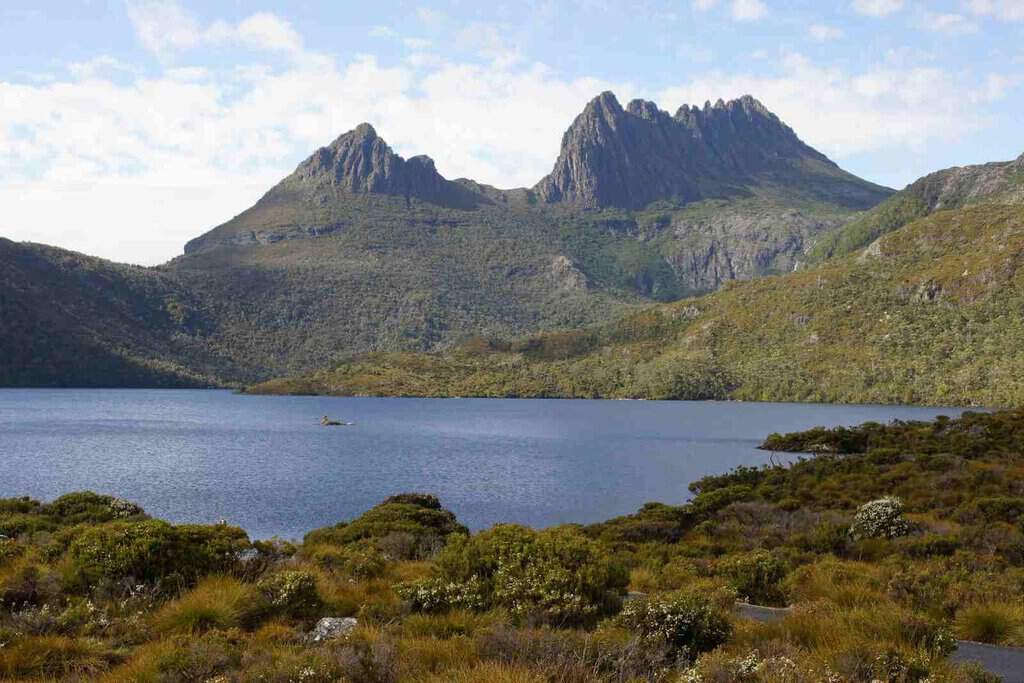
Hobart is the capital and the obvious starting point. It’s a compact, walkable city with good food, Salamanca Market on Saturdays, and MONA — the Museum of Old and New Art — which is worth a trip to Tasmania on its own. Beyond Hobart, Cradle Mountain and the Overland Track are in the northwest, Wineglass Bay and Freycinet National Park are on the east coast, and Port Arthur is about 90 minutes south of Hobart on the Tasman Peninsula.
When to Visit Tasmania
Summer (December to February) is the most popular time to visit — long days, warm temperatures, and the best conditions for hiking and outdoor activities. It’s also peak season, so accommodation books out fast and prices go up. Book well ahead if you’re going in January.
Autumn (March to May) is genuinely good — cooler but comfortable, the crowds thin out, and the deciduous trees in places like Hobart and the Huon Valley put on a decent show. Winter is cold and wet, especially in the highlands, and some tracks are closed or difficult. Spring (September to November) is unpredictable weather-wise, but the wildflowers in the national parks make it worthwhile if you don’t mind layering up.
How to Get to Tasmania
There are two ways to get to Tasmania — fly or take the ferry. Hobart Airport and Launceston Airport both have direct flights from Melbourne (around 1 hour 10 minutes), Sydney (around 1 hour 45 minutes), and Brisbane (around 2 hours 45 minutes). Flights from Melbourne are the most frequent and usually the cheapest.
The Spirit of Tasmania ferry runs between Melbourne’s Station Pier and Devonport on the north coast of Tasmania. It’s an overnight crossing that takes around 9–10 hours — a good option if you want to bring your own car across, which saves hiring one once you arrive. The ferry is popular, so book well ahead during the summer.
Getting Around Tasmania
A hire car is essential. Tasmania has no passenger train network — there are no trains between cities or towns — and the bus network, while it exists, doesn’t cover most of the places visitors actually want to go. Cradle Mountain, Freycinet, the Tasman Peninsula, and most of the wilderness areas all need a car.
In Hobart itself, the CBD and waterfront are walkable, and most of the main attractions — Salamanca Market, Battery Point, the Tasmanian Museum and Art Gallery — are within easy walking distance. For MONA, there’s a ferry from Brooke Street Pier in the city that’s the most scenic way to get there. Hobart Airport is about 17km from the city centre — a taxi or Uber takes around 20 minutes and costs roughly $40–$55.
Where to Start in Tasmania
Hobart. Give it at least 2 full days — MONA alone takes a half day. From Hobart, the Tasman Peninsula is an easy day trip or overnight. Freycinet National Park is about 2.5 hours north and worth 2 days minimum — the Wineglass Bay walk is excellent, but there’s plenty more to do beyond the lookout. Cradle Mountain is about 3.5 hours from Hobart and needs at least an overnight stay. A full loop of the island works best as a 7–9 day road trip. Use the guides below to plan it out.