
Australia’s Best Beaches 2026 – The Official List Is Here

Australia Travel Hub contains affiliate links and is a member of the Amazon Services LLC Associates Program. If you make a purchase using one of these Amazon links, we may receive compensation at no extra cost to you. See our Disclosure Policy for more information.
Australia has over 12,500 beaches – more than any other country on earth.
So when beach expert and ambassador Brad Farmer AM drops his annual Best Australian Beaches study, it’s worth paying attention.
His 130-point assessment covers everything from water clarity and sand quality to community spirit, First Nations cultural significance, and how safely each beach is managed. It’s the most thorough beach ranking in the country.
The 2026 list is out – and it’s a genuinely interesting mix. Here’s every beach that made the cut this year.
1. Bate Bay Beaches, New South Wales 🏆
(Gweagal Country, Sydney)
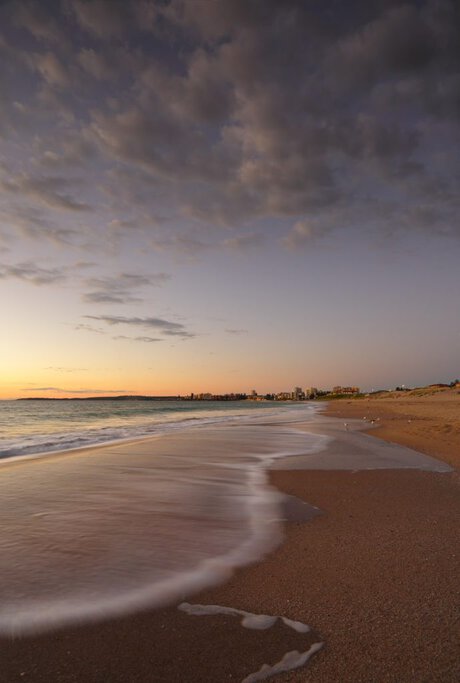
Bate Bay takes the number one spot for 2026 – and it earns it. Sitting less than 30 minutes from Sydney Airport, this stretch of coastline along the Sutherland Shire is Sydney’s longest and least crowded run of sand.
It feels like a proper reset the moment you step onto it.
This is Gweagal Country, part of the Dharawal Nation, and the area holds real historical weight as the site of the first recorded meeting between Aboriginal Australians and European colonisers in 1770.
Many beaches here carry First Nations names – Gunnamatta, Wanda, Elouera, and Cronulla, which translates to “place of pink seashells”.
The bay packs in ten well-maintained, family-friendly beaches and four ocean baths, all framed by two national parks.
Greenhills Beach runs for 4.8 kilometres – Sydney’s longest single stretch – while sandstone-carved ocean pools at the southern end offer sheltered swimming.
The newly opened clifftop walk around Hungry Point is already drawing strong praise, with wide views across Port Hacking toward Bundeena and Jibbon Beach.
It’s also one of the most practical coastal destinations in Sydney – served by the city’s only direct train line to a surf beach, with free beachside parking and a ferry connection from Cronulla Wharf to historic Bundeena.
As a National Surfing Reserve since 2008, the bay has genuine surf history and serious breaks when the conditions show up.
Cafes and dining options line the area, making it an easy full-day destination.
2. Pinky Beach, Western Australia
(Whadjuk Noongar Country, Rottnest Island / Wadjenup)
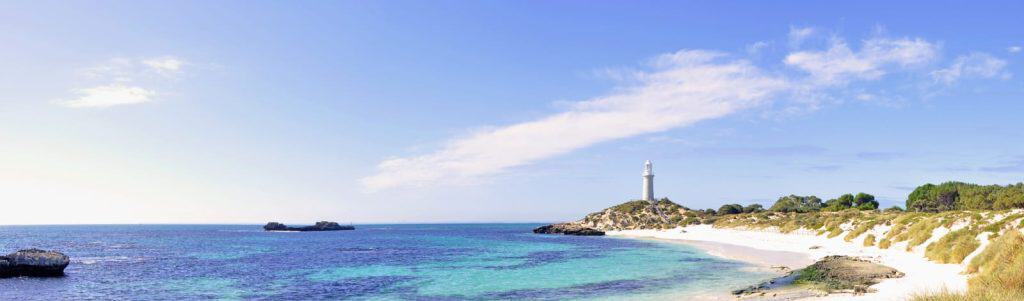
Rottnest Island – “Rotto” to locals – sits just 17 kilometres off Perth and holds 63 beaches across its rugged 36-kilometre coastline.
Fast ferries from Perth City or Fremantle get there in around 30 minutes. Pinky Beach, a short walk from the ferry terminal at Thomson Bay, is the standout pick.
It faces north-east, the water stays calm for most of the day, and shallow reefs dotted with seagrass make it ideal for snorkelling.
It’s a clean, well-positioned pocket beach with the kind of clear blue water that’s hard to leave.
When the swell is up, more experienced surfers head for Strickland or Salmon Bay on the other side of the island.
The island itself carries a complex history – it served as a prison for Aboriginal Noongar men and boys between 1838 and 1931, with around 3,700 people held there.
It became a public reserve in 1903. Today, most visitors hire a bike, pack a picnic and spend the day exploring.
The island’s famous quokkas – around 11,000 of them – are a big part of the appeal too.
3. Beachcomber Cove, Queensland
(Yuwibara Country, Cape Hillsborough)
At sunrise, kangaroos wander along the shoreline at Beachcomber Cove while the Coral Sea catches the early light behind them.
It’s the kind of scene that makes you stop walking for a moment.
The surrounding Cape Hillsborough National Park supports 170 bird species, 28 tropical butterflies, 32 mammals and over 500 plant species – it’s a living ecosystem rather than a curated attraction.
The cove sits on the sheltered north-eastern side of a low sandy isthmus, which keeps conditions calm with light winds and gentle waves most of the time.
Five walking tracks lead out from the area – the Yuibera Plant Trail through Hidden Valley highlights Indigenous bush foods, while the Andrews Point Track offers five lookout points framed by native hoop pines.
Cape Hillsborough is 50 kilometres by sealed road from Mackay – an easy day trip. For overnight stays, the Tourist Park is the only beachfront option, with cabins and caravan sites available.
Bring drinking water, check for stingers, and read all local signage – and note that domestic animals aren’t permitted in the park.
4. Tallow Beach, New South Wales
(Bundjalung of Byron Bay (Arakwal) Country)
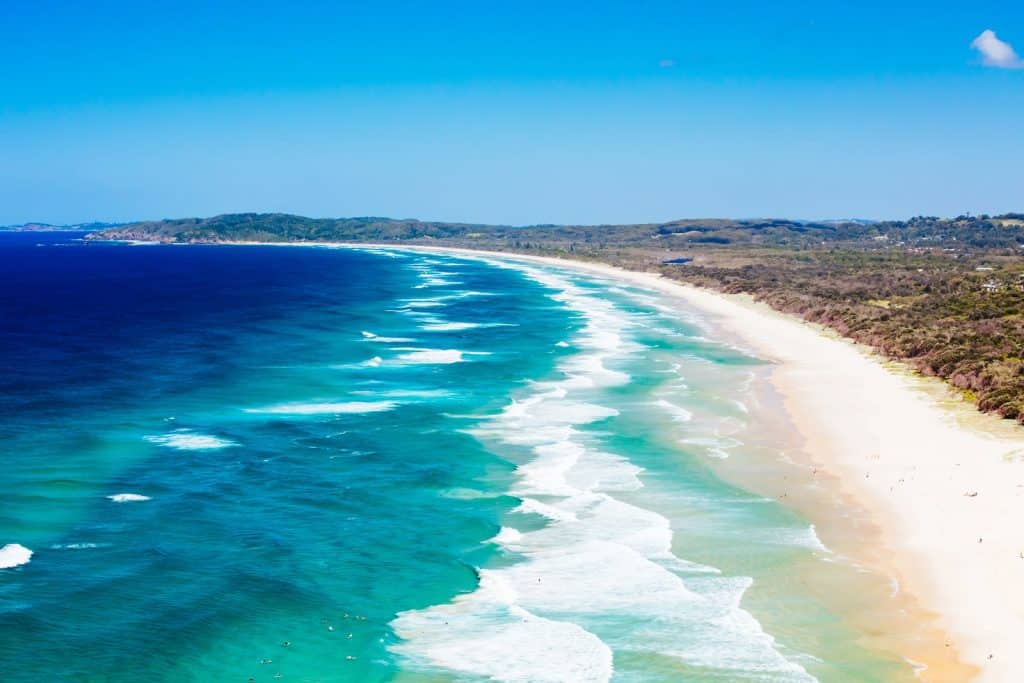
Most visitors to Byron Bay stick to the four main beaches close to town.
But Tallow Beach, just three kilometres from the centre, runs for around seven kilometres through Arakwal National Park from below the Cape Byron-Walgun lighthouse south to Broken Head Nature Reserve.
It spills out from undeveloped dunes and coastal heath and feels like a completely different side of Byron
The pace here is slower. It’s the kind of beach suited to a long walk at sunrise, a bodysurf in the shallows, or an afternoon where nothing much happens.
Less developed, less photographed, and noticeably less crowded than Byron’s better-known spots. NSW has more signature headlands than any other state, and this stretch shows exactly why.
Access is via managed car parks at Cosy Corner and Broken Head. The beach is unpatrolled, so check conditions before swimming.
Dogs are welcome in zoned areas. Continue south past Broken Head, and you’ll reach Kings Beach – a semi-hidden cove backed by rainforest, popular with the LGBTQ+ community for decades.
5. Hellfire Bay, Western Australia
(Wudjari Noongar Country, Cape Le Grand National Park)
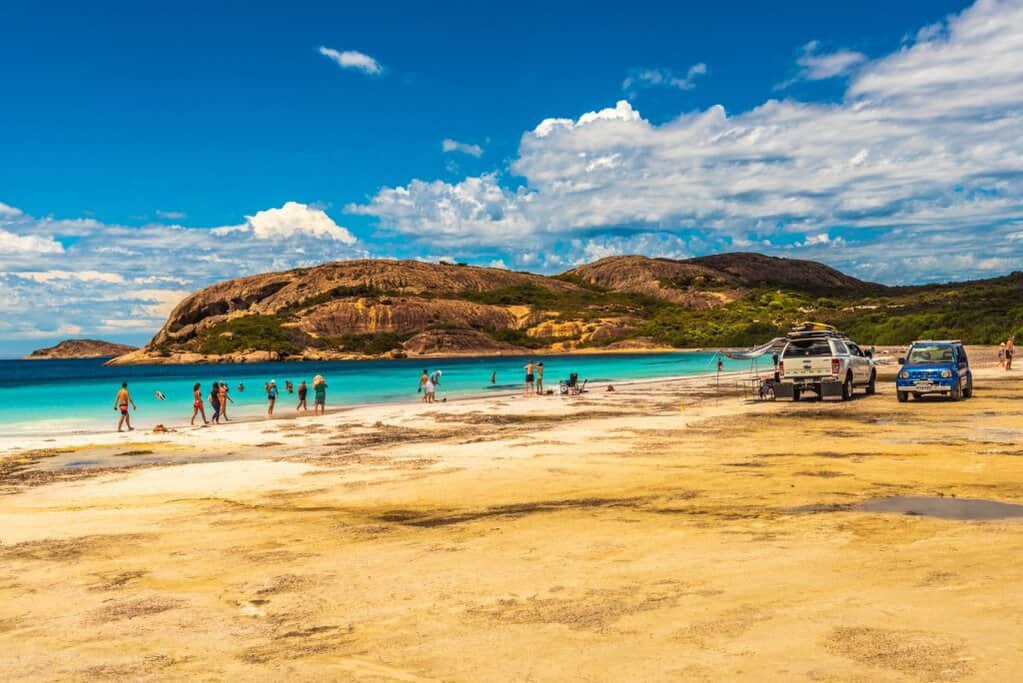
Around seven hours southeast of Perth, Hellfire Bay sits inside Cape Le Grand National Park and consistently ranks among the most striking beaches in the country.
The name sounds dramatic – the beach itself is all white sand, gin-clear water and rounded granite boulders that shift colour as the light moves through the day.
It’s the kind of beach you don’t want to rush through.
Vehicles aren’t permitted on the sand, which keeps it feeling calm and unhurried. Kangaroos come down to the waterline, and dolphins appear beyond the break on calmer days.
Swimming and snorkelling conditions are generally gentle compared to more exposed beaches nearby.
Both Big Hellfire and Little Hellfire are within reach, and Esperance is about 45 minutes away for supplies.
This part of the WA coast draws people who’ve made the trip specifically to switch off. It’s remote, it’s unspoilt, and it tends to leave a lasting impression.
6. Godfreys Beach, Tasmania
(Palawa Country, Stanley)
Godfreys Beach sits at the base of The Nut (Munatrik) in the historic village of Stanley – a 143-metre volcanic plug rising from the Bass Strait that’s one of Tasmania’s most recognisable natural landmarks.
It’s the eroded core of an ancient volcano, dramatic from the water and even more so up close. A chairlift reaches the summit, or there’s a steep walking track for those who prefer it.
The beach stretches for around 1.1 kilometres along the northern edge of town, facing north-east so the prevailing westerlies blow offshore.
Waves are typically small, breaking across a wide shallow bar at low tide.
At the far end sits Highfield House, built in the 1830s as the base of the Van Diemen’s Land Company, which was central to opening up Tasmania’s northwest from 1826.
A picnic area sits at the southern end, with Stanley’s compact main street just behind it.
The deep-water harbour, operating since 1827, is still active – fishing boats head out for weeks at a time.
Penguins come ashore along this coast – the free viewing platform at Godfreys Beach is worth checking at dusk.
7. Inskip Point, Queensland
(Kabi Kabi and Butchulla Country)
Inskip Point is a narrow sand spit about 10 kilometres from Rainbow Beach, sitting directly across the water from the southern tip of K’gari (Fraser Island) – a UNESCO World Heritage-listed island.
It’s an open, unpretentious stretch of coast edged by she-oaks and cypress pines, and it’s the main gateway for vehicle crossings to K’gari.
The western side is calm and shallow, suited to fishing and small boats.
The eastern beach faces the open Cooloola Coast with strong rips and shifting conditions – swimming there is not safe.
Throughout the day, 4WDs line up along the shore, checking tide times before boarding the daily vehicle barge.
Camping is spread across several basic but well-positioned sites with toilet facilities, and stays of up to 29 days are permitted.
Book camping permits online before arrival, especially in holiday periods. Be dingo, shark and crocodile in this area.
The site is also geologically unstable, with landslips and sinkholes not uncommon.
Nearby Tin Can Bay and Rainbow Beach have accommodation and supplies if more comfort is needed.
8. Mount Martha, Victoria
(Boon Wurrung Country, Mornington Peninsula)
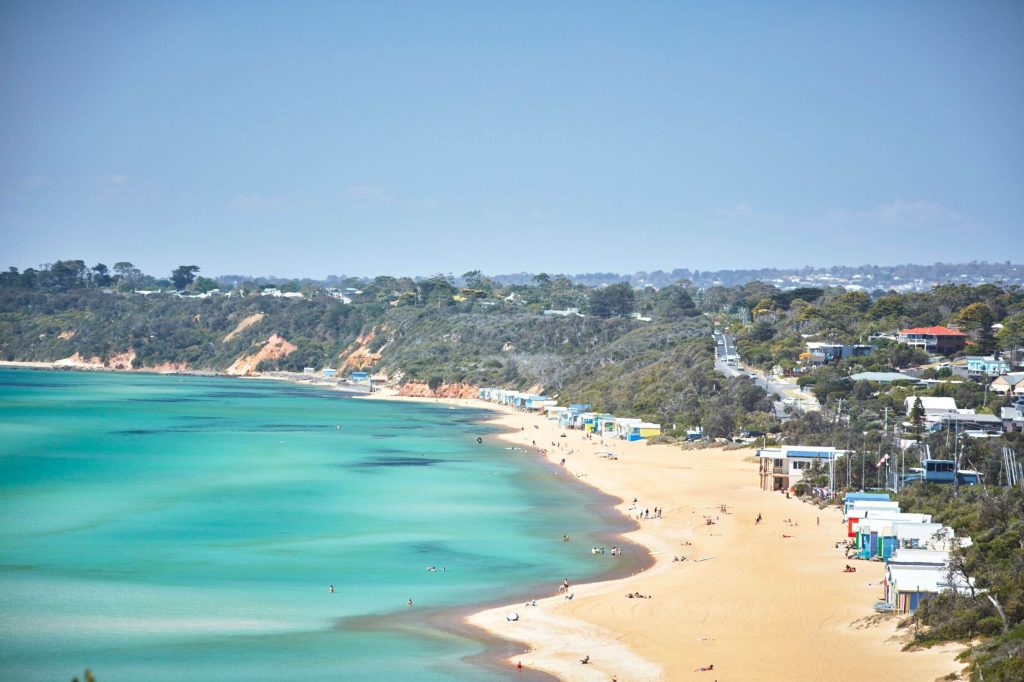
Making its debut on the Best Australian Beaches list in 2026, Mount Martha is a two-kilometre stretch of beach on the eastern shoreline of Port Phillip Bay, just over an hour’s drive south of Melbourne.
The Mornington Peninsula – “The Pen” to locals – is a well-loved escape from the city, and Mount Martha is one of its best-presented coastal spots.
The beach splits into two sections – Mount Martha North and South – divided by the mouth of Balcombe Creek.
It’s considered one of the safer swimming options on a coastline that gets more hazardous further south and east.
A row of iconic beach boxes lines the foreshore, with clear views across the bay and a vegetated bluff to the south.
Mount Martha has built a strong reputation for accessibility and inclusive design – an approach now adopted more broadly across the Peninsula.
Volunteer surf lifesaving patrols cover most weekends and peak holiday periods, supported by the local Coast Guard.
Parking is easy, cafes are close by, and sailing at nearby Safety Beach adds another option for a full day out.
9. Smoky Bay, South Australia
(Wirangu Country / Mirning, Kokatha and Wirangu)
Smoky Bay is a small Eyre Peninsula town of a few hundred people that packs in more than you’d expect – an 18-hole golf course, a long jetty, fresh local seafood, and access to some genuinely remote coastal country in South Australia.
The town was named by early European navigators for the smoke rising from Aboriginal fires. Its original First Nations name, Wallanippie, referenced a nearby waterhole.
It’s a long drive west from Adelaide, but for those who value quiet and open horizons, the journey fits.
Beaches here come with real seclusion – exploring the roads around Point Brown Headland rewards patience, with rock pools at low tide, sheltered swimming and off-grid camping for those properly set up.
A shark-free swimming enclosure sits just off the town jetty.
Nearby Denial Bay and the breaks around Streaky Bay add to the region’s appeal. The local oyster farms are a genuine highlight – and it’s not unusual to buy them directly from the source at a very good price.
Note: seals haul out along the nearby shoreline, which means large sharks are known to be in the area. Stay informed and swim in the enclosure if in doubt.
10. Ellery Creek Big Hole, Northern Territory
(Arrernte Country, Tjoritja / West MacDonnell National Park)
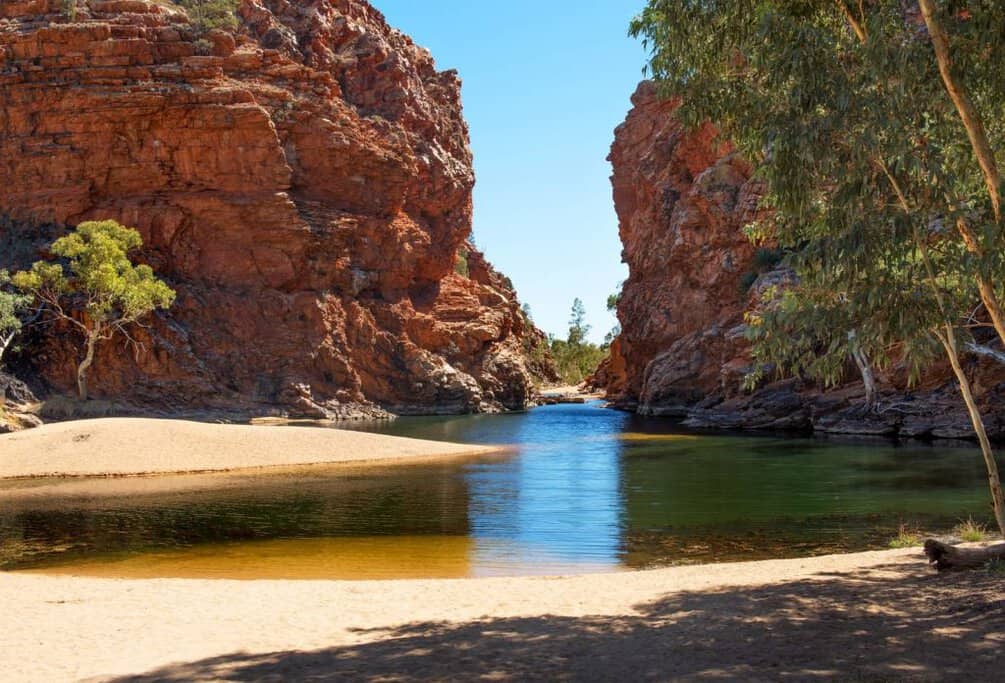
Not every beach faces the ocean. Ellery Creek Big Hole is a permanent waterhole around 80 kilometres west of Alice Springs, set deep in the gorge country of Tjoritja / West MacDonnell National Park.
Red cliffs rise on either side, towering ghost gums provide shade, and the water sits still and cool below.
It’s one of the most striking natural swimming spots in the country – and it doesn’t look like anything else on this list.
The site lies within Arrernte Country and forms part of traditional fishing and honey ant Dreaming trails.
Quiet respect and a strict leave-no-trace approach are essential here. Along nearby Namatjira Drive, a series of gorges, chasms and waterholes reveal geology shaped by massive flood events over thousands of years – places of deep spiritual significance.
Swimming is permitted, but the water in deeper sections can be extremely cold – ease in gradually to avoid cramps, and be aware of submerged debris after heavy rain.
Carry drinking water for any walks. Ellery Creek Big Hole is wheelchair accessible and reachable by standard two-wheel-drive vehicles.
Campsites with toilet facilities are available, but book ahead.
Brad Farmer’s Best Australian Beaches study uses a 130-point assessment guide developed over decades of field research in collaboration with Professor Emeritus Andrew Short. The full criteria and rankings are available via @BestAustralianBeaches. Australia Travel Hub acknowledges the Traditional Aboriginal and Torres Strait Islander Owners of the land, sea and waters of the Australian continent, and recognises their custodianship of Country for over 65,000 years.
