
9 Days in Tasmania: The Complete Road Trip Itinerary

Australia Travel Hub contains affiliate links and is a member of the Amazon Services LLC Associates Program. If you make a purchase using one of these Amazon links, we may receive compensation at no extra cost to you. See our Disclosure Policy for more information.
Tasmania rewards people who slow down.
I’ve seen travellers try to pack this island into five days and come back exhausted — they drove more than they walked, rushed through Port Arthur, and missed Freycinet at the right time of day.
Nine days isn’t even enough to see everything, but it’s enough time to cover the best things to do in Tasmania without feeling rushed.
This Tasmania road trip itinerary covers a counter-clockwise loop from Hobart — south to the Tasman Peninsula, up the east coast through Freycinet and the Bay of Fires, north to Launceston, then west to Cradle Mountain before looping back.
It’s a self-drive circuit and the most logical way to see the island’s main regions without backtracking.
One honest note before you start planning — this itinerary moves.
There’s a fair bit of driving involved in covering this much ground in nine days, and if I did this trip again, I’d slow it down.
I’d spend an extra night at Cradle Mountain, linger longer at the Bay of Fires, and give Freycinet an extra night.
Tasmania rewards slow travel more than almost anywhere else in Australia.
Use this as a framework, but don’t be afraid to drop a stop or two and just stay longer where you love it.
Tasmania at a Glance
| Day | Focus | Base |
|---|---|---|
| Day 1 | Arrive Hobart — Salamanca, Battery Point, waterfront | Hobart |
| Day 2 | MONA + kunanyi / Mount Wellington | Hobart |
| Day 3 | Tasman Peninsula — Eaglehawk Neck, Port Arthur, Remarkable Cave | Port Arthur area |
| Day 4 | Drive north — Swansea, Spiky Bridge, arrive Freycinet Lodge, Cape Tourville | Coles Bay |
| Day 5 | Freycinet hikes — Wineglass Bay, Friendly Beaches — move to Bicheno | Bicheno |
| Day 6 | Bay of Fires — Binalong Bay to Eddystone Point, overnight St Helens | St Helens |
| Day 7 | Drive to Launceston — Bridestowe Lavender Estate, Cataract Gorge | Launceston |
| Day 8 | Drive to Cradle Mountain (~2.5 hrs) — Leven Canyon detour, Dove Lake Circuit + Marion’s Lookout | Cradle Mountain |
| Day 9 | Drive to Hobart — Liffey Falls, Russell Falls + Horseshoe Falls, Mount Field National Park | Hobart |
| Optional Day 10 | Extra night at Cradle Mountain — more walks before drive to Hobart via Liffey Falls + Russell Falls | Hobart |
Getting Around Tasmania
Tasmania is a self-drive destination. Public transport exists between some towns, but it’s not practical for completing this itinerary.
A self-drive vehicle is by far the most practical way to do this trip — though guided multi-day tours and private operators do exist if you prefer not to drive.
Pick up your hire car at the airport or ferry terminal on Day 1 and keep it for the full trip.
Tasmanian roads are generally in good condition between major towns, but they get narrow, winding, and slow once you’re in the highlands or on the coast.
Distances look short on the map, and take longer than expected to drive. Google Maps sometimes routes you down unsealed tracks — check each leg before heading off the main roads.
Wildlife is a serious hazard at dusk and dawn. Wallabies and wombats are responsible for most wildlife-related accidents, while Tasmanian devils and possums are also commonly seen on roads after dark.
Avoid driving after dark, and if you have to, slow right down on any road passing through bush or farmland.
Best Time to Visit Tasmania
Spring (September–November) and autumn (March–May) are the most reliable windows — mild temperatures, manageable daylight hours, and fewer crowds than the summer peak.
Autumn is particularly good for the east coast; the light on the Bay of Fires in April and May has a quality to it that doesn’t come through in photos.
Summer (December–February) is warm and busy — peak season for Freycinet, Bay of Fires, and Cradle Mountain.
Book accommodation months ahead if you’re going over Christmas or New Year. Winter (June–August) is a different trip entirely.
Cradle Mountain walks can be icy and snowbound — the upper alpine tracks are most at risk, though the Dove Lake Circuit is less frequently affected — and the west coast is brutal. If you’re visiting in winter, have a backup plan for your Cradle Mountain day.
Getting to Tasmania
Tasmania sits 240km south of the Victorian coast, separated by the Bass Strait.
By air — Hobart Airport (HBA) has direct connections from Melbourne, Sydney, and Brisbane. Launceston Airport (LST) works well if you want to start from the north and loop south. Flight times are about 1 hour from Melbourne and 1.5–2 hours from Sydney.
By ferry — The Spirit of Tasmania runs overnight between Melbourne (Station Pier, Port Melbourne) and Devonport on the north coast. The crossing takes 9–11 hours.
It’s a practical choice if you’re bringing your own car, and the sailing itself is part of the experience. Book well ahead for summer crossings — the ferry fills up months out.
Where to Stay in Tasmania
For a 9-day loop, I’d recommend moving bases rather than driving back to one place each night. Here’s how I’d split it.
Hobart for Days 1–2. Stay near Salamanca Place for easy access to the waterfront and Battery Point.
I stayed in an Airbnb in Lenah Valley — a quiet residential suburb about 11 minutes from the city centre — and it’s one of my favourite bases on the whole trip.
You get more space and a calmer setting without being far from anything, and the real bonus is the wildlife.
Kangaroos were hopping around just behind the house — something you’d never expect 11 minutes from a capital city.
For hotel options, see the Best Accommodations in Hobart guide.
Port Arthur area for Day 3. There are a handful of good lodges within a few kilometres of the historic site.
Freycinet Lodge, Coles Bay for Day 4. I stayed here, and it’s one of the highlights of the whole trip — the lodge sits inside the national park, the pavilions look out over Great Oyster Bay, and you fall asleep with the Freycinet Peninsula right outside.
If you love it, extend to two nights and use the extra day for more walks. There’s enough in the park to fill two full days easily.
Bicheno for Day 5. A short drive north from Coles Bay — move here after your morning at Freycinet and book the evening penguin tour.
St Helens for Day 6. The closest town to the Bay of Fires and the logical overnight stop after a full day on the coast. There are several good accommodation options in town and along the foreshore.
Launceston for Day 7. I stayed at Balmoral on York — a solid 4-star hotel right in the city centre, convenient for Cataract Gorge and the restaurant strip. One night is enough.
See the Best Hotels in Launceston for more options.
Cradle Mountain area for Day 8. I’d suggest an alternative to staying right at the visitor centre — I stayed in an Airbnb on Claude Road near Mount Roland, about an hour from Cradle Mountain.
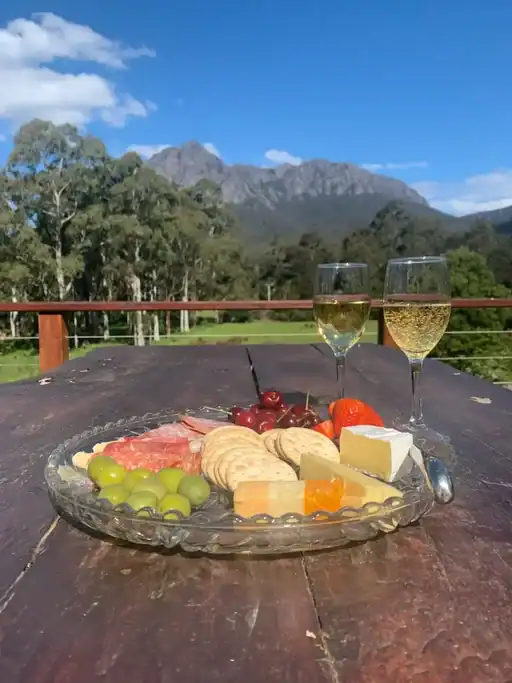
It’s more secluded than anything near the park entrance, and waking up to the view of Mount Roland in the background makes the drive worth it.
That said, if you’d rather be closer, Cradle Wilderness Village (Discovery Parks) has small cabins with spa baths near the visitor centre.
For a full rundown of the best places to stay near the park, see the 9 Best Luxury Accommodations in Cradle Mountain.
Wherever you stay, bring food supplies — dining near the park is limited and expensive.
Day 1 — Arrive Hobart
Hobart is Australia’s second-oldest capital city and one of the most compact and liveable.
The waterfront is walkable, the food scene punches well above the city’s size, and the mountain at its back changes the feel of the place in a way that no other Australian capital quite manages.
Salamanca Place is the obvious starting point — a row of Georgian sandstone warehouses from the 1830s, now home to galleries, cafés, and restaurants.
Every Saturday, Salamanca Market sets up along the full length of the street (approximately 8:30 am–3 pm — check current hours before visiting as these can vary seasonally).
If Day 1 falls on a Saturday, that’s your morning sorted without any further planning.
From Salamanca, walk up Kelly’s Steps into Battery Point — Hobart’s original residential neighbourhood, with narrow streets, colonial cottages, and the Hampden Road café strip.
It’s genuinely unlaboured, unlike many heritage precincts on the mainland.
The Tasmanian Museum and Art Gallery (TMAG) on Davey Street is free to enter and worth a couple of hours — one of Australia’s oldest museums, with a strong natural history and Tasmanian Aboriginal collection.

While you’re on the waterfront, two smaller museums are worth a look. The Maritime Museum of Tasmania in the Carnegie Building covers the island’s seafaring history — early European explorers, whalers, native boats, and shipwrecks off the Tasmanian coast.

The collection of ship models, artefacts, and paintings is impressive for the size of the building.
It’s generally open 9 am to 5 pm daily — check before visiting as hours can vary. A few minutes’ walk away,
Mawson’s Huts Replica Museum recreates the huts used by Douglas Mawson and his crew on their 1911 Antarctic expedition, which departed from Hobart.

It’s a small museum but an interesting one — generally open 10 am to 3 pm daily, though hours can vary.
If you have spare time, Richmond makes an easy half-day trip — it’s only 25 minutes from Hobart and home to Australia’s oldest stone bridge still in use, along with well-preserved colonial streetscapes.
For dinner, the Drunken Admiral on Hunter Street is the right call on your first night.

It’s been run by the same family since 1979 and serves fresh Tasmanian seafood in a nautical dining room that feels genuinely old rather than themed.
I’ve eaten here, and the seafood platter is worth ordering — the oysters and scallops are local.
Day 2 — MONA and Kunanyi / Mount Wellington
Two of Hobart’s most distinctive experiences work well together as a full day.
Start at Kunanyi / Mount Wellington (1,271 metres) while the morning is clear — cloud moves in fast, especially in autumn and winter, and you want visibility from the summit.
You can drive to The Pinnacle, about 22km from the CBD on a winding but sealed road. Check road conditions before heading up — the summit road closes periodically in winter due to snow, ice, or high winds.
There’s usually a sign at the bottom of the winding road indicating whether it’s open and passable.
The views over Hobart, the Derwent, and out across the D’Entrecasteaux Channel are worth the drive.
In the afternoon, take the ferry from Brooke Street Pier to MONA (Museum of Old and New Art) — about 25 minutes across the water.
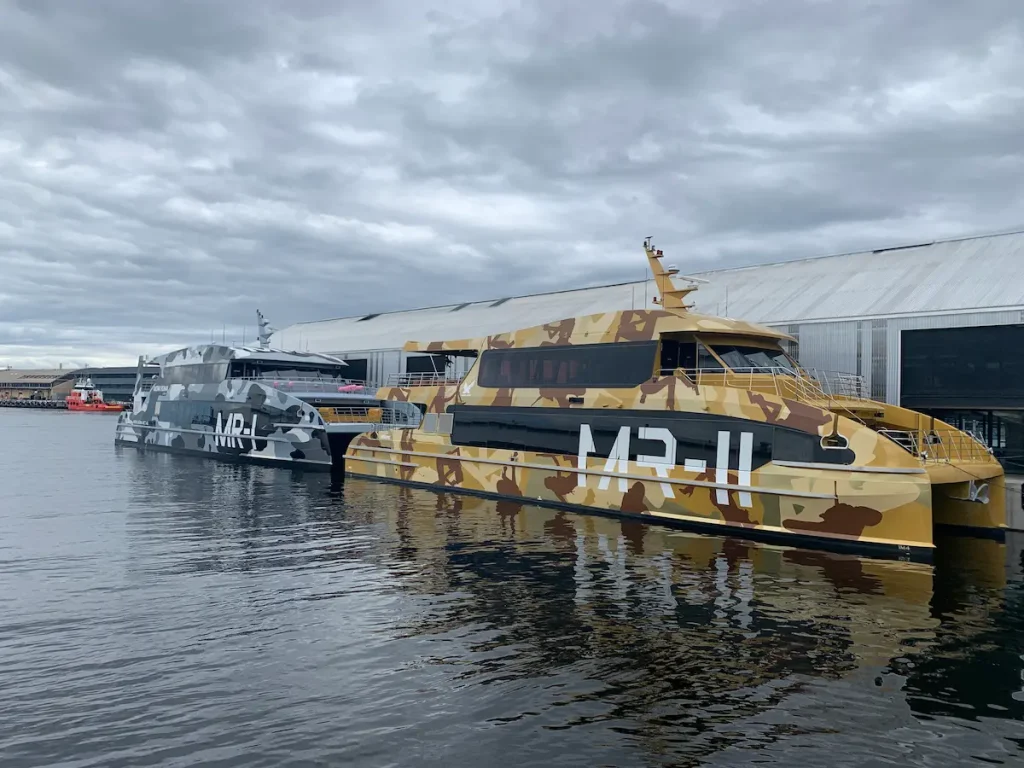
MONA is unlike any other museum in Australia — three levels of underground architecture with a collection that spans ancient Egyptian artefacts and confrontational contemporary art.

It’s also genuinely quirky, and some exhibits are deliberately shocking. Go in with an open mind and don’t bring young children unless you’ve done your research on what’s showing.

Plan for 3–4 hours and check the website for current exhibitions before you go. The bar and restaurant overlooking the river are worth staying for if you want to take the later ferry back.
MONA is closed on Tuesdays — worth checking if this falls on your Day 2.
Day 3 — Tasman Peninsula: Eaglehawk Neck, Port Arthur, Remarkable Cave
Drive about an hour south of Hobart to the Tasman Peninsula — one of the most geologically dramatic parts of Tasmania, with dolerite sea cliffs dropping 300 metres into the Southern Ocean.
On the drive down, stop at Eaglehawk Neck and the cluster of geological formations a few minutes further along the road.
The Tessellated Pavement is a flat rock shelf by the water covered in tile-like patterns formed by natural erosion — a 10-minute walk from the car park.

Then continue to Tasman’s Arch, Devil’s Kitchen, and the Blowhole, which are all within a few minutes of each other and take about an hour total. These are quick stops but genuinely worth the time.


The main event is the Port Arthur Historic Site. Tasmania was one of Britain’s most significant convict settlements, and Port Arthur — established as a timber station in 1830 and converted into a penal settlement in 1833, operating until 1877 — is the most complete surviving example in the country.
Give it at least 4 hours — once you include the harbour cruise, a guided talk, the church, the Separate Prison and the gardens, the time goes quickly.
Do a guided tour if you can; walking the ruins without one, you’d miss most of the context. Entry includes access to all buildings and a short harbour cruise.
Remarkable Cave is 10 minutes south of Port Arthur. A short stairway descends to a sea cave carved into the cliff face — at certain tides, many people think the end of the tunnel resembles the shape of Tasmania.

It’s an easy add-on from your Port Arthur base and worth combining rather than treating as a separate stop.
Cape Hauy is worth knowing about if you want to add a serious hike to this day.
The track is 10km return (4–5 hours) starting from Fortescue Bay and leads to a clifftop lookout over two freestanding dolerite sea stacks — the Candlestick and the Totem Pole. It’s one of the best coastal hikes in Tasmania.
That said, it’s a genuine half-day commitment and doesn’t combine easily with a full Port Arthur visit.
If Cape Hauy is a priority, consider an early morning start from your Port Arthur accommodation before the historic site opens, or treat it as its own day if you have an extra night on the peninsula.
For a wilderness cruise between Port Arthur and Eaglehawk Neck, see the Tasman Peninsula Wilderness Cruise review.
For accommodation, I’d recommend Storm Bay Bed and Breakfast — a lovely B&B a short drive from the historic site.
The rooms are beautifully done, the carpet is so thick and soft it genuinely feels like walking on clouds, and the balcony looks out over a garden full of flowers.
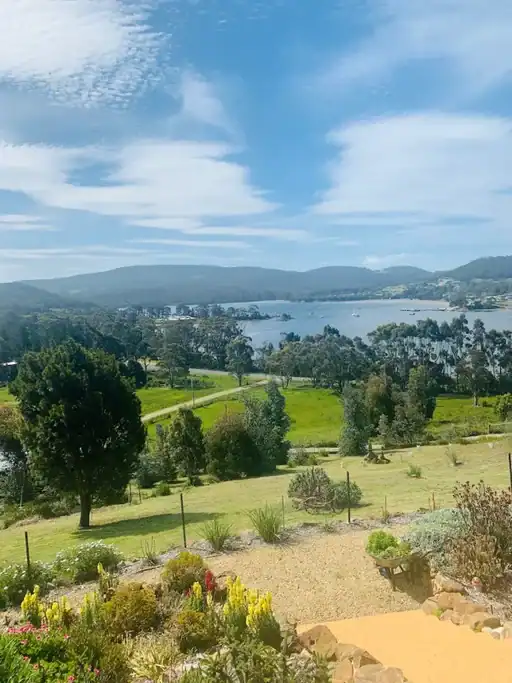
The owner is warm and welcoming, and when I mentioned I needed to leave early the next morning for Freycinet, she put together a packed breakfast to take on the road. That kind of thoughtfulness is hard to find.
For dinner, On the Bay is one of the best options nearby. It sits right on the waterfront, and the food is exceptional — fresh local seafood with a view that makes the meal.

Day 4 — Drive to Freycinet via Swansea and Spiky Bridge
The drive from Port Arthur to Coles Bay is about 2.5 hours on the east coast route — a comfortable day with a couple of good stops and a beautiful destination at the end.
Swansea is roughly halfway and the right place to stop for lunch. It’s a small coastal town on Great Oyster Bay with decent cafés, and from the waterfront you can already see the pink granite peaks of the Freycinet Peninsula across the water. Give it an hour.
Just north of Swansea, watch for the turn to Spiky Bridge — a convict-built stone bridge from 1843 with sharp, vertically placed stones lining both sides of the walls.
No one is entirely sure why the convicts built it that way. It’s a five-minute stop and oddly memorable.
Check in to Freycinet Lodge in Coles Bay — the lodge sits inside the national park itself, with pavilions looking out over Great Oyster Bay and the Freycinet Peninsula right outside your window.
I stayed here, and it’s genuinely one of my favourite places on the whole trip. If you love it, consider extending to two nights — there’s more than enough in the park to fill two full days.
In the afternoon, take a short drive to Cape Tourville for the 20-minute clifftop boardwalk around the lighthouse — excellent coastal views and the easiest walk in the park.

Then stop at Sleepy Bay for the pink granite boulders and turquoise water before heading back to the lodge for the evening.

Day 5 — Freycinet Hikes, Then Bicheno
Use the morning for the main Freycinet hikes before checking out and heading north to Bicheno.
The main event is Wineglass Bay — a crescent of white sand framed by pink granite peaks that earns every bit of its reputation.

The Wineglass Bay Lookout track (30 minutes each way) gives you the classic view from above.
The better option for walkers is to continue down to the beach and complete the full circuit via the isthmus — 3–4 hours total.
The alternative is Mt Amos — a 2–3 hour scramble up bare granite with a summit view that’s better than the lookout. Go for Mt Amos if you’re comfortable on steep terrain.
The track becomes extremely slippery when wet and should not be attempted in poor weather or after rain.
During summer and school holidays, arrive early — the Wineglass Bay car park fills quickly, and you may need to wait for a space.
Friendly Beaches is about 15 minutes north of Coles Bay — long, usually empty, and a good final stop before the drive north.
For a perspective from the water, see the Wineglass Bay Cruise Review (this is what we did and the Wineglass Bay Lookout).
Bicheno is about 40 minutes north of Coles Bay — a small fishing town with good cafés and a reliable fish-and-chip shop at the harbour.
Before the evening, walk out to the Bicheno Blowhole — a natural rock formation on the foreshore where wave action forces water up through a gap in the granite.

The force of it varies with the swell, but on a big day, it’s impressive. It’s a short walk from the town centre and worth the detour before dinner.
Then book the Bicheno Penguin Tour for the evening — a guided walk to the local Little Penguin rookery after dark.
It’s about 90 minutes and runs year-round. Book ahead in peak season.
Day 6 — Bay of Fires and Overnight in St Helens
Head north from Bicheno for a full day at the Bay of Fires before stopping in St Helens for the night.
The Bay of Fires stretches from Binalong Bay to Eddystone Point along Tasmania’s northeast coast.
Bay of Fires was named Australia’s Best Beach in 2025 — the award covered the southern cluster of beaches stretching between Binalong Bay and The Gardens, roughly 10km of coastline in the Bay of Fires Conservation Reserve.
The defining feature is the orange lichen on the granite boulders set against white sand and clear blue water — a colour combination specific to this coastline.
Binalong Bay is the southern entry point and the most accessible section. The beach is generally calm and popular for swimming, and the boulders are right on the sand.
Drive north through The Gardens and on toward Swimcart Beach and Cosy Corner — increasingly remote the further you go.

Road conditions north of The Gardens can vary — check current conditions before continuing to Eddystone Point and the lighthouse at the park’s northern end — a 37-metre granite structure built in 1889.
Allow a good few hours here before driving back to St Helens for the night — about 25 minutes from Binalong Bay or around 50 minutes from Eddystone Point.
In our case, we didn’t stay at St. Helens. We drove past The Bay of Fires, missed the Eddystone Point because it was too far, and then drove straight to Launceston. It’s going to be a long drive, though. You can do this as well, then just add the extra night to Cradle Mountain.
Day 7 — Drive to Launceston via Bridestowe Lavender Estate
It’s about 2.5 hours from St Helens to Launceston. Break it up with a stop at Bridestowe Lavender Estate near Nabowla — Tasmania’s most photographed lavender farm.
Peak bloom is January, but the estate is open year-round, and the grounds and café are worth the short detour off the main road.
Launceston is Tasmania’s second city, sitting at the junction of three rivers. It’s a compact city with a better food scene than most visitors expect.
The main afternoon activity is Cataract Gorge — a dramatic river gorge about a kilometre from the CBD with steep walking tracks, a chairlift across the gorge, and a small reserve with free-roaming peacocks.

The South Esk River carved this gorge into the edge of the city, which makes it one of the strangest and most impressive things you’ll find within walking distance of a town centre.
I stayed at Balmoral on York — a 4-star hotel right in the city centre, comfortable and well-located for both Cataract Gorge and the restaurant strip.
One night here is enough before the early start to Cradle Mountain.
Day 8 — Drive to Cradle Mountain, Afternoon Walks
The drive from Launceston to Cradle Mountain is around 2.5 hours from central Launceston. Leave early — if you’re on the road by 7 am, you’re at Cradle Mountain before 10 am with a full afternoon of walking ahead of you.
It’s worth making a detour to Leven Canyon near Nietta — a short walk to a clifftop lookout over a 250-metre canyon carved by the Leven River.
It’s about 45 minutes return and genuinely impressive; most people drive straight past it. With an early start, this still puts you at Cradle Mountain by mid-morning.
Pick up a Tasmania Parks Pass at the visitor centre if you haven’t already — it covers all national parks and is worth buying for a trip that includes Freycinet and Cradle Mountain.
Regular shuttle buses run between the visitor centre and Dove Lake — check the current timetable at the visitor centre on arrival.
Start with the Dove Lake Circuit — a 6km loop around a glacial lake with Cradle Mountain reflected in the water.
Allow 2.5–4 hours depending on your pace and how many photos you stop for. Go as early in the afternoon as you can to stay ahead of the tour buses.
If you have energy after the circuit, add Marion’s Lookout — a steep 1.5–2-hour return climb from the lake that takes you above the tree line.
The view is completely different from Dove Lake; you’re looking out across the interior highland plateau rather than up at the mountain. Hard going but worth it if your legs are up for it.
The wildlife around the visitor centre at dusk is worth staying for — wombats graze the open grasslands most evenings, and it’s some of the most accessible wildlife viewing in Tasmania.
Cradle Mountain is the one place on this itinerary where an extra night genuinely pays off.

There are more walks here than you can do in a day, and the landscape changes completely with the weather.
If you can extend to 10 days, use the extra night here. For accommodation options near the park, see the 9 Best Luxury Accommodations in Cradle Mountain.
Get food supplies before arriving — dining near the visitor centre is limited and expensive.
Day 9 — Drive to Hobart via Liffey Falls and Russell Falls
The drive from Cradle Mountain back to Hobart takes around 4.5–5 hours without stops.
With two waterfall stops built in, allow around 6 hours total — leave by 9 am to be back in Hobart comfortably by early evening.
Stop first at Liffey Falls, south of Deloraine in the Great Western Tiers — a 20-minute return walk through fern gullies to a multi-tiered waterfall set in tall eucalypt forest.

It’s a genuinely beautiful stop and a quiet contrast to the open alpine landscape you’ve just left.
Then continue south to Russell Falls in Mount Field National Park, about 75km northwest of Hobart.

The walk is 600 metres return and leads to one of the most photographed waterfalls in Tasmania.
Continue 10 minutes further up the trail to Horseshoe Falls — smaller than Russell Falls but striking in its own right, and worth the extra effort if you have time.
Plan to be back in Hobart by early evening.
If you have a second night at Cradle Mountain, use Day 9 for the bigger hikes instead — the Cradle Mountain Summit track (8km return, 5–6 hours), Hansons Peak, and Twisted Lakes walk are all worth it.
Drive to Hobart on Day 10 via the same waterfall stops. For a full breakdown of what’s available at the park, see the Cradle Mountain Walks guide.
Tasmania Travel Tips
- You need a hire car — public transport outside Hobart is not a practical option. Book in advance, especially in summer.
- Slow down — Tasmanian roads are narrower, windier, and slower than mainland roads. Distances always take longer than Google Maps suggests.
- Wildlife at night — wombats and wallabies cause serious accidents. Avoid driving after dark on any bush or country road.
- Cradle Mountain weather — the upper alpine walks can close due to snow or ice at any time of year, particularly outside summer. The Dove Lake Circuit itself is less frequently affected, but still check conditions before heading up. Have a backup plan ready.
- MONA — closed Tuesdays. Check before visiting.
- Salamanca Market — Saturdays only, approximately 8:30 am–3 pm. Check current hours before visiting, as these can vary seasonally.
- Bicheno Penguin Tour — book in advance during peak season. Runs year-round.
- Tasmania Parks Pass — worth buying if you’re visiting two or more national parks. Covers Freycinet, Cradle Mountain, Mount Field, and all others.
- Bruny Island — not in this 9-day circuit, but worth adding if you have extra days. Catch the ferry from Kettering (40 minutes from Hobart) and spend a full day — see the Bruny Island Day Tours from Hobart page for tour options.
- West Coast extension — if you have 10+ days, consider adding Strahan and the Gordon River Cruise. The Gordon River runs through the Tasmanian Wilderness World Heritage Area, and the cruise is one of the most distinctive experiences in the country. It doesn’t fit a 9-day circuit without rushing — treat it as an extension or a reason to come back.
- Sheffield — the Town of Murals sits between Launceston and Cradle Mountain on the Day 8 drive. Worth a short stop if you’re making good time.
- Ross — if you’re driving the Midlands Highway between Launceston and Hobart, Ross is one of Tasmania’s best-preserved historic towns. A quick stop adds character to what’s otherwise a straight drive.
- Mobile reception — expect patchy to no signal around Cradle Mountain, Bay of Fires, and parts of Freycinet. Download offline maps before you leave, and don’t rely on live navigation in remote areas.
- Packing — see the Tasmania Packing List for a full gear breakdown.
Frequently Asked Questions
How many days do you need in Tasmania?
Nine days cover the main circuit — Hobart, Tasman Peninsula, east coast Tasmania, Launceston, and Cradle Mountain. If you can stretch to 10 days, use the extra night at Cradle Mountain — it’s the one place on this itinerary that genuinely rewards staying longer. There are more walks than you can do in a single day, and the landscape changes completely depending on the weather. Seven days is possible, but the pace is tight throughout.
Do you need a car in Tasmania?
Yes. Tasmania is a self-drive destination — there’s no practical alternative for this kind of itinerary. Hire a car on arrival and keep it for the full trip.
What is the best time to visit Tasmania?
Spring (September–November) and autumn (March–May) are the most consistent. Summer has the best weather but is peak season — book accommodation early. Winter is manageable in Hobart and on the east coast, but Cradle Mountain can be snowbound, and the West Coast is very exposed.
Can you do Tasmania in 7 days?
Yes, with prioritising. A 7-day Tasmania itinerary typically covers Hobart, Port Arthur, Freycinet, and either Cradle Mountain or Launceston — not all four. Nine days is the minimum to do the full circuit comfortably.
What are the best hikes in Tasmania?
Cape Hauy on the Tasman Peninsula, the Dove Lake Circuit at Cradle Mountain, and Mt Amos at Freycinet are the three most-cited short-to-medium hikes. The Overland Track (6 days, 65km) is the most well-known multi-day walk, but requires booking and serious preparation. For a full breakdown, see the Cradle Mountain Walks guide.
