
Is Adelaide Worth Visiting? A Local’s Honest Answer

Australia Travel Hub contains affiliate links and is a member of the Amazon Services LLC Associates Program. If you make a purchase using one of these Amazon links, we may receive compensation at no extra cost to you. See our Disclosure Policy for more information.
“Is Adelaide worth visiting” gets searched by thousands of people who’ve only ever heard the word “boring” attached to this city.
I live in Adelaide’s southern suburbs, and I get asked some version of this question by almost every visitor before they arrive.
The honest answer is yes – and most people who actually show up are surprised by how much they get wrong beforehand.
So, Is Adelaide Worth Visiting?
Yes.
Adelaide won’t hit you with one giant landmark the way Sydney’s Harbour Bridge or Uluru does, and that’s exactly why it gets underrated.
What it does have is a walkable CBD, some of the best food and wine access in the country, beaches 20 minutes from the centre, and a cost of living that’s around 17% lower than Sydney’s.
It’s not a city that performs for tourists. It’s a city that quietly works, and that’s a different kind of good.
If you’re weighing Adelaide up against Australia’s other capitals, Adelaide vs Perth and Adelaide vs Canberra are both worth a read before you lock anything in.
Adelaide at a Glance
| Adelaide | |
|---|---|
| Best time to visit | September–November (spring), March–May (autumn) |
| Days needed | 3–4 days in the city, 5+ with day trips |
| Budget per day | Noticeably cheaper than Sydney or Melbourne |
| Getting around | Free tram to Glenelg, free City Connector bus, hire car for day trips |
| Closest beach | Glenelg, 20 minutes by tram |
| Airport to CBD | ~15 minutes by taxi or Uber, no direct train |
What Adelaide Is Actually Like
Adelaide has a reputation problem more than an actual problem.
It gets compared to Sydney’s harbour and Melbourne’s laneways, loses on both counts, and gets written off as “beige” by people who’ve usually never been.
What I’ve found living here is that Adelaide doesn’t try to be either of those cities.
Most of my own trips into the city are for events – Illuminate Adelaide, the Adelaide Fringe, or catching up with friends who live closer to the centre.
The pace is slower, the CBD is genuinely walkable end to end in about 25 minutes, and the parklands ring the whole city centre, so you’re never far from green space.
The food and wine scene is where Adelaide quietly wins – the Barossa Valley and McLaren Vale both sit within an hour of the CBD, which no other Australian capital can claim.
March is when the city changes completely. The Adelaide Fringe, the Adelaide Festival, and WOMADelaide all run at once, and locals call it “Mad March” for good reason.
Top Things to Do in Adelaide
Free Things to Do in Adelaide
✅ Adelaide Central Market
The Adelaide Central Market was ranked the third best food market in the world in April 2026, beaten only by London’s Borough Market and Philadelphia’s Reading Terminal Market.
It’s open Tuesday to Saturday with over 70 traders, and it’s free to wander even if you don’t buy a thing.
Go on a Thursday or Friday morning for the best atmosphere – Saturdays get packed, and parking nearby disappears fast.
I’ve been for the produce – the fruit and veg prices are genuinely good – and I’ve been just to wander and try different stalls.
If I’m honest, the reason I first went out of my way for it was the Dubai chocolate that one of the stalls sells. It’s pricier than you’d expect for a single bar, so it was a one-off treat rather than a regular buy – I haven’t bought a second one since.
✅ North Terrace
North Terrace is Adelaide’s free cultural strip. The South Australian Museum and the Art Gallery of SA sit side by side, and both have free entry.
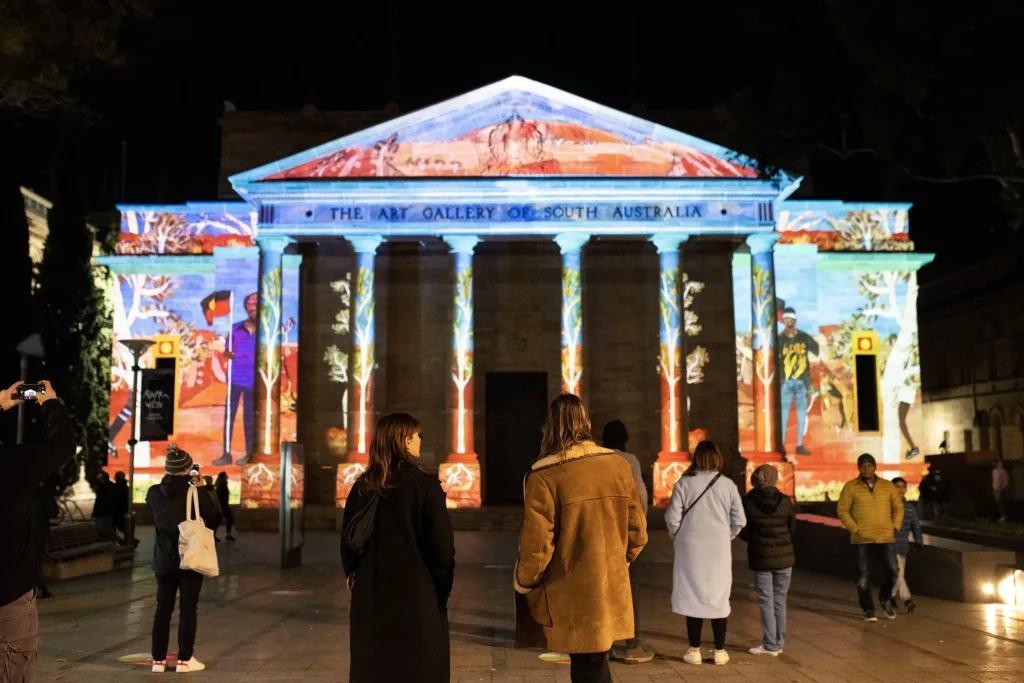
The SA Museum’s Pacific Cultures and First Nations galleries are the real highlight, and most visitors rush past them.
✅ Adelaide Botanic Garden
The Adelaide Botanic Garden sits at the eastern end of North Terrace, is 50 hectares, and is free to enter every day.
It’s a good midday break between the museum and the East End. The National Wine Centre sits right next door if you want to cap it off with a taste of something local.
✅ River Torrens Linear Park
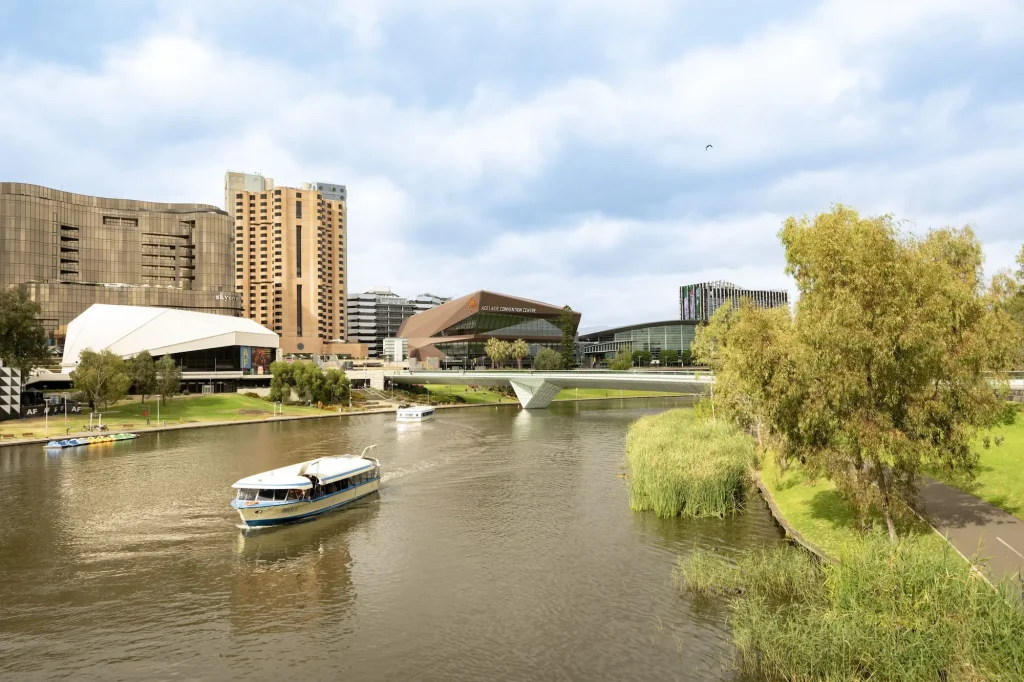
The river path (Karrawirra Pari) runs west from the city and is one of the nicer free walks in the CBD.
Adelaide Oval sits right on the bank – even without a game on, it’s worth a look from the footbridge.
✅ Rundle Mall and the East End Laneways
Rundle Mall is my favourite part of the city for shopping – Kmart, Target, Uniqlo, and most of the major retailers are lined up along the same stretch.
It’s the main shopping strip generally, but the real draw is through the Rundle Street laneways east of it – Ebenezer Place and Vardon Avenue – where the food and bar scene actually lives.
The street art through these laneways is free entertainment on its own.
Paid Attractions in Adelaide
✅ RoofClimb Adelaide Oval
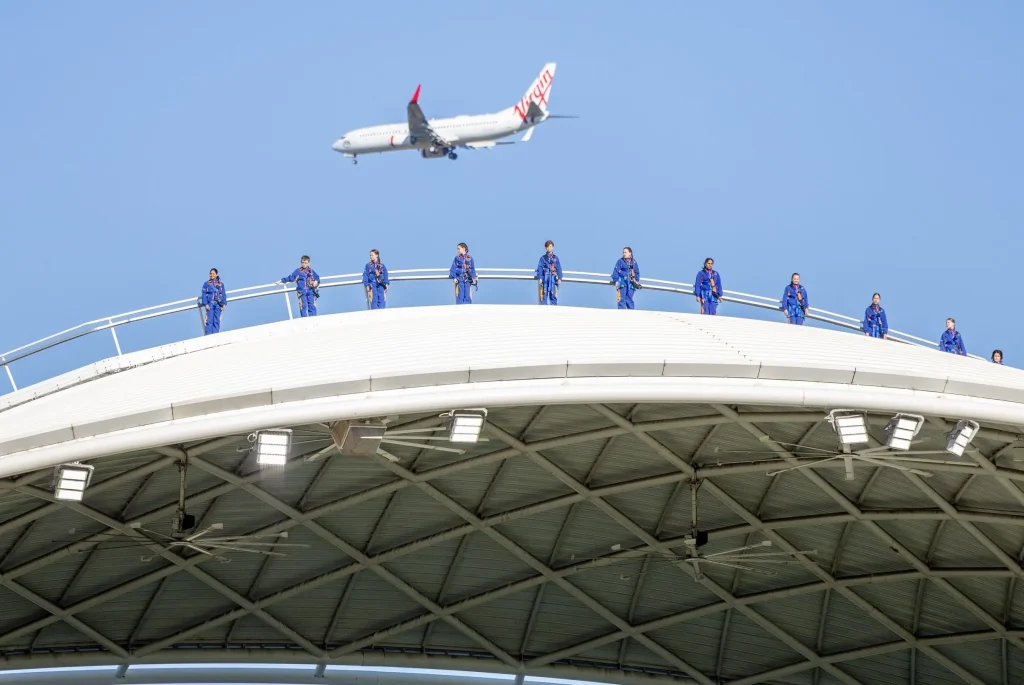
RoofClimb Adelaide Oval takes you to the top of one of the most scenic sporting grounds in the country.
Stadium tours run most days if the climb feels like too much. 👉 Book RoofClimb here
✅ Cleland Wildlife Park
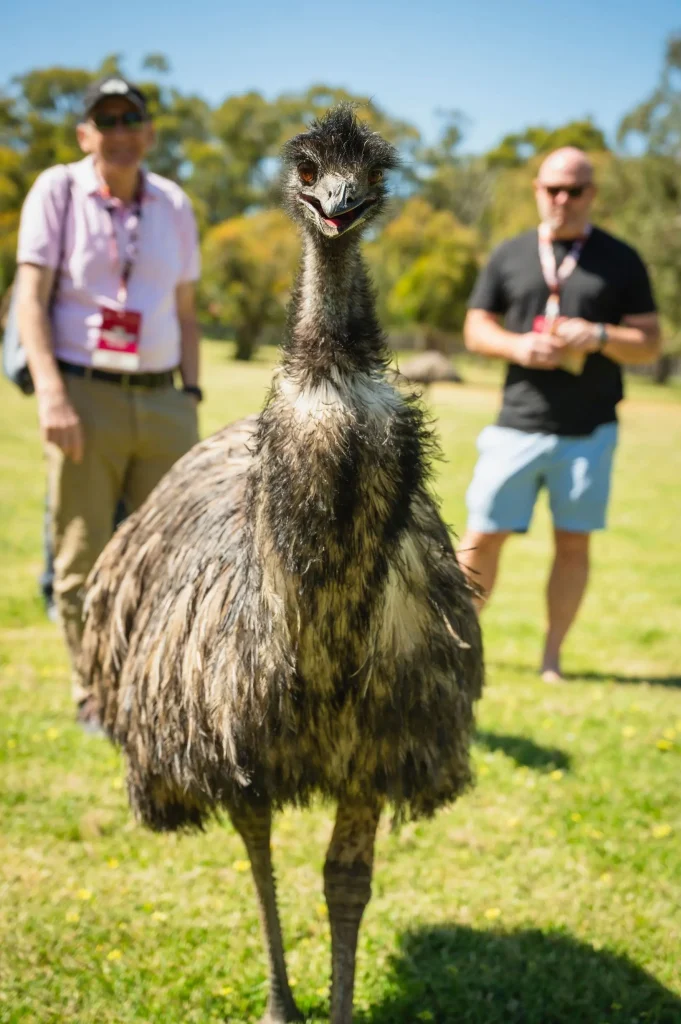
Cleland Wildlife Park, about 45 minutes from the city near Norton Summit, has koalas, wombats, and free-ranging kangaroos.
It doesn’t feel like a zoo, and keeper talks run throughout the day.
✅ Penfolds Magill Estate
Penfolds Magill Estate is 10 minutes from the CBD and gives you the full Penfolds tasting experience without the drive to the Barossa.
Worth it if a full-day trip north isn’t on the cards. 👉 Book a Penfolds tasting here
✅ Port Adelaide Dolphin and Shipwreck Kayak Tour
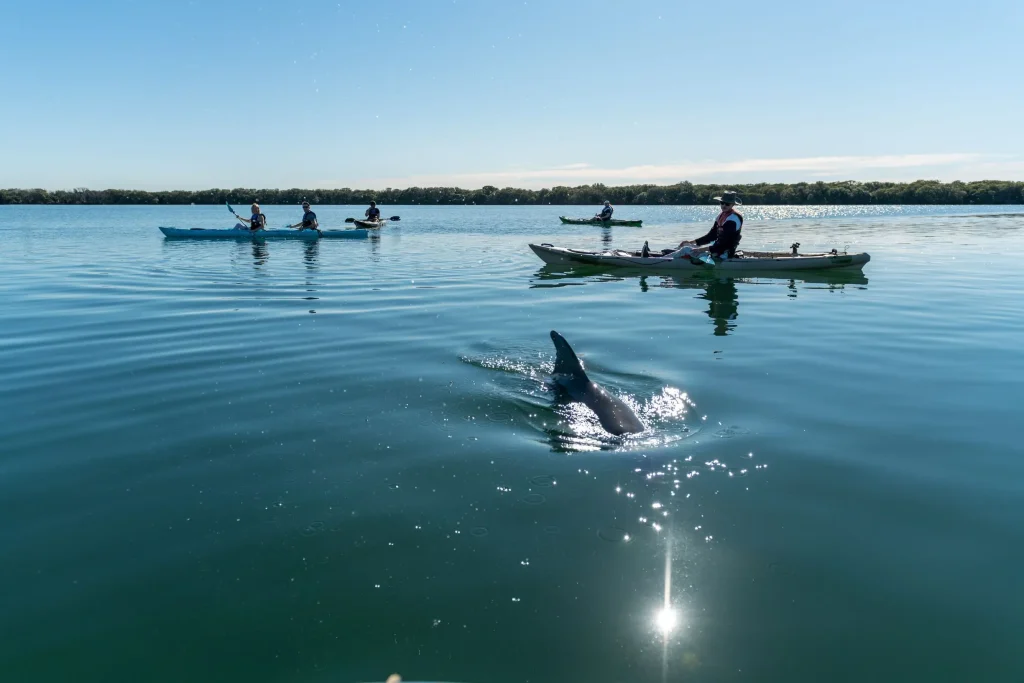
Port Adelaide, about 30 minutes from the CBD, is where most visitors skip, and most locals send their friends instead.
The kayak tour glides through the Dolphin Sanctuary past wild bottlenose dolphins and the Ships Graveyard, where wrecked vessels from the 1800s still sit in the shallows.
Pair it with a visit to Pirate Life Brewery in the Old Port precinct afterwards. 👉 Book the Port Adelaide kayak tour here
Adelaide’s Best Neighbourhoods
The areas of Adelaide worth knowing about as a tourist are more compact than people expect – most of them sit within a 25-minute walk or one tram ride of each other.
✔️ East End and Rundle Street
This is where most first-timers should base themselves. It’s walking distance to North Terrace, the Central Market, and the laneway bars, and it’s the liveliest part of the CBD after dark.
✔️ North Adelaide
North Adelaide feels like a different city entirely – tree-lined streets, bluestone cottages, and a genuinely English-village feel just 15 minutes’ walk from downtown.
It’s close to Adelaide Oval and the parklands, and it’s a good pick for a quieter stay that’s still central.
✔️ Glenelg
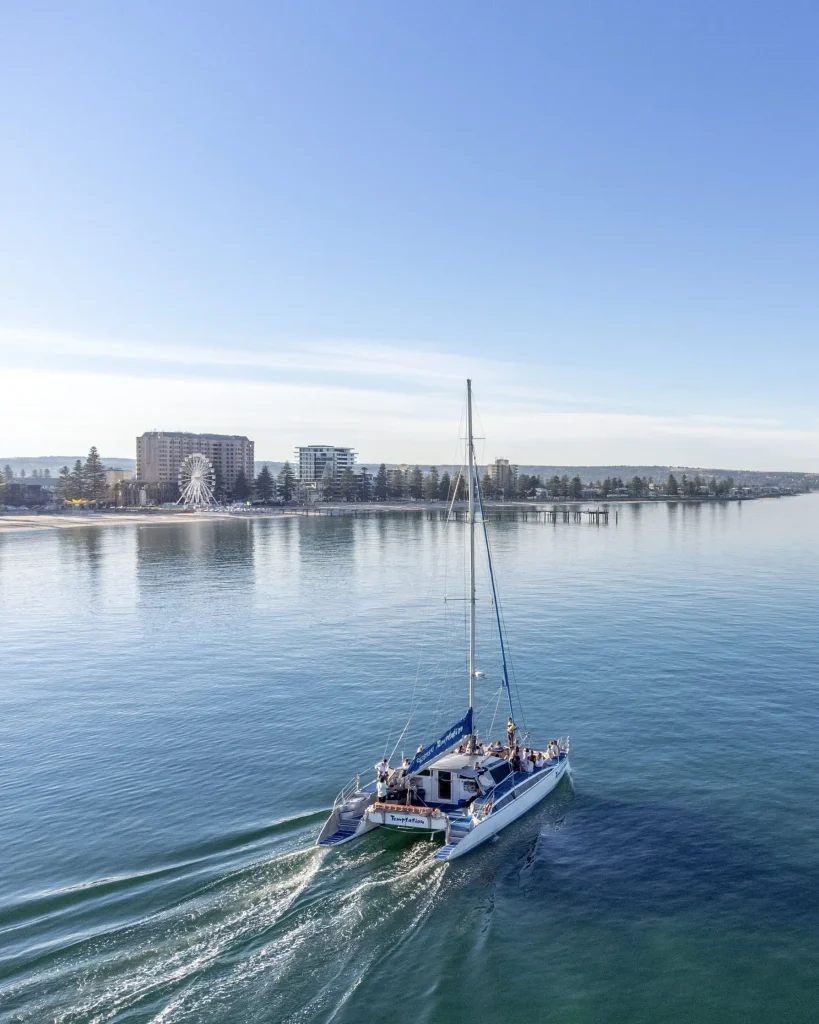
Glenelg is Adelaide’s beach suburb, reached by a free 20-minute tram ride from Victoria Square.
Jetty Road has the shops and restaurants, and the foreshore is good for swimming from October to April.
I always celebrate New Year at Glenelg – the foreshore fireworks are some of the best I’ve seen anywhere in Adelaide.
The Giant Wheel at the end of Moseley Square is worth a ride too, with good views back over the beach and out to the water. It runs seasonally, roughly October to May.
In summer, Moseley Beach Club sets up daybeds and swing seating right on the sand next to Moseley Square, with live music most evenings and no bookings needed.
The food and cocktails are better – and more reasonably priced – than I expected. It’s self-service, so you order and collect at the kiosk yourself.
I’d skip dressing up, though. The furniture gets sandy and damp from swimmers, and the pigeons are persistent enough to make eating outside genuinely annoying.
My full Glenelg guide covers it in more detail.
✔️ Unley and Prospect
Unley Road and Prospect Road are where a lot of locals actually eat – trendy cafes, independent shops, and none of the tourist markup.
Both are a short bus ride from the centre and worth a look if the CBD feels too polished.
Adelaide’s Food and Wine Scene
Adelaide’s food scene is quietly one of the best in the country, and it’s the thing most visitors underestimate before they arrive.
🍽️ Lucia’s has been running at the Central Market since 1957 – Adelaide’s first pizza bar, and the spaghetti bolognese recipe hasn’t changed in over 55 years.
🍽️ Africola on East Terrace does African-inspired feed-me dinners in a heritage East End building, open Tuesday to Saturday from 6 pm.
🍽️ Peel St in the West End does an Asian-fusion menu that regularly ranks among the city’s best – closed Sundays, and worth booking ahead.
🍽️ Haigh’s Chocolates at Beehive Corner on Rundle Mall is Australia’s oldest family-owned chocolate maker, trading from the same corner since 1915. Worth a stop even if you’re not big on sweets.
Where to Stay in Adelaide
Budget
The Soho Hotel on the edge of the East End has open-plan suites with kitchenettes and free parking – a solid budget pick.
Adelaide Central YHA on Waymouth Street works well for solo travellers, with private rooms available alongside the usual dorms.
Mid-range
Mantra Adelaide Central on King William Street has self-contained apartments with kitchens, set inside the heritage T&G Building right in the CBD.
ibis Adelaide on Grenfell Street is the more affordable of the two and well located for walking everywhere.
Luxury
InterContinental Adelaide sits on the River Torrens with proper hotel polish.
The Mayfair Hotel is Adelaide’s top-rated 5-star boutique hotel, set inside the heritage-listed CML Building on King William Street.
Eos by SkyCity is a boutique option in the heart of the CBD with Hecker Guthrie interiors – a good pick for a couple’s weekend.
For the full top-end breakdown, see my luxury hotels in Adelaide guide.
Travelling with Kids or Wanting a Pool
If a pool matters more than a CBD address, my guide to the best Adelaide hotels with a pool covers the family-friendly options in more detail.
Day Trips from Adelaide
This is Adelaide’s biggest advantage over every other Australian capital – genuinely excellent day trips, most within 90 minutes and Kangaroo Island a little further again.
| Destination | Distance | How to Get There | Best For |
|---|---|---|---|
| Barossa Valley | ~60 km north | 1 hour by car | Shiraz, old cellar doors, Seppeltsfield |
| Adelaide Hills | ~30 km east | 30 minutes by car | Hahndorf, hiking, autumn colour |
| McLaren Vale | ~40km south | 45 minutes by car | Wine, the d’Arenberg Cube, food |
| Fleurieu Peninsula | ~90km south | 1–1.5 hours by car | Victor Harbor, whales (May–Oct) |
| Kangaroo Island | ~110km south | 1.5hr drive + 45-min ferry, or 30-min flight | Wildlife, Remarkable Rocks |
Barossa Valley is old-vine Shiraz country, about an hour north of the city. Seppeltsfield, established in 1851, is the anchor stop, and Tanunda is the best base for lunch.
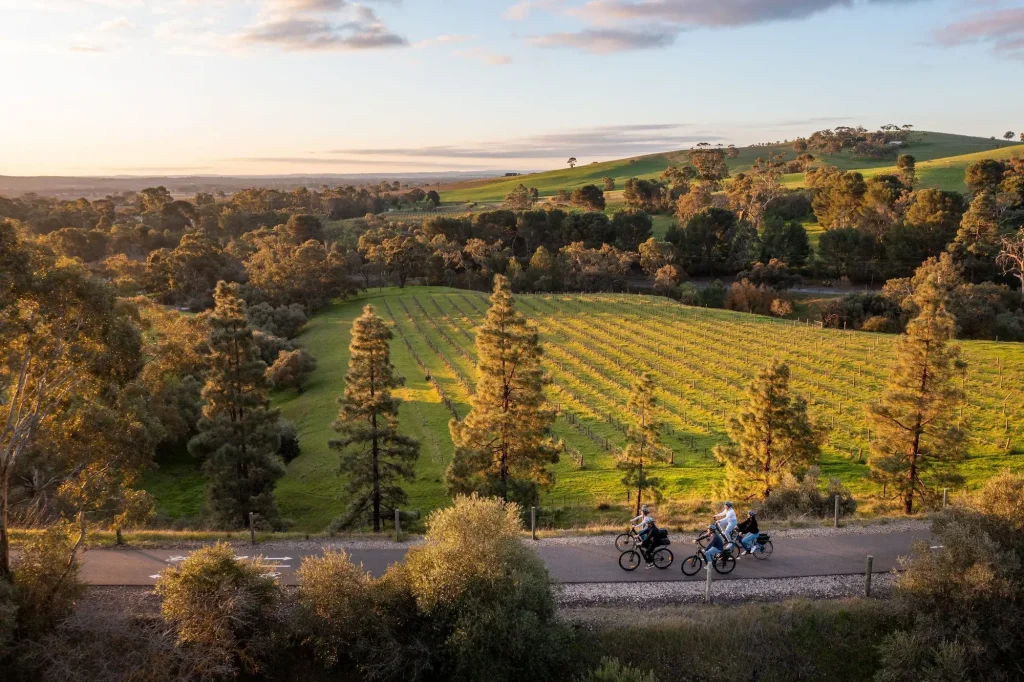
For a guided option that covers tastings without the driving, my best wine tours from Adelaide guide has the full list.
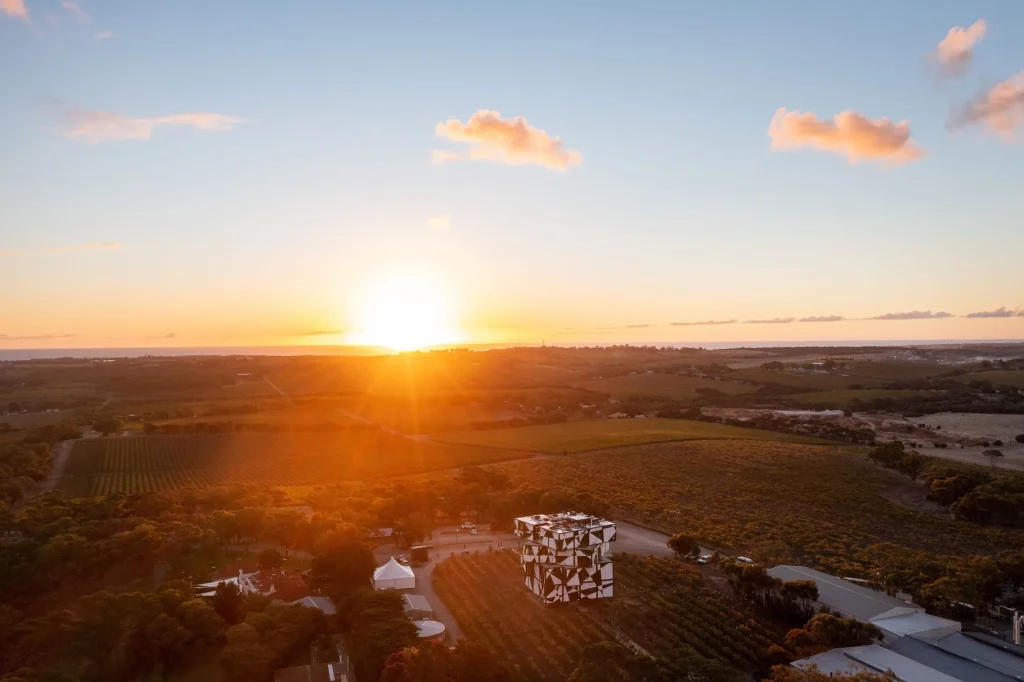
McLaren Vale sits about 45 minutes south, with over 80 cellar doors and a more relaxed feel than the Barossa. The d’Arenberg Cube is the one attraction worth building a day around, even if wine isn’t the priority.
I’ve been to the Cube myself, and it’s genuinely quirky – almost disorienting in places, and it reminds me of MONA in Hobart, just a milder version.
Kangaroo Island needs a 45-minute ferry from Cape Jervis, itself about 1.5 hours from Adelaide, or a 30-minute flight from Adelaide Airport. Seal Bay and Remarkable Rocks are the standouts, and two days are more realistic than a rushed one.
For everything outdoors within reach of the city, my outdoor activities in Adelaide guide goes wider than just the wine regions.
Getting Around Adelaide
Central Adelaide is flat and walkable, and most of what matters in the CBD sits within that 25-minute end-to-end walk.
The free City Connector bus loops the CBD roughly every 15 minutes, and the free tram runs from North Terrace all the way to Glenelg.
For day trips – Barossa Valley, the Hills, McLaren Vale, the Fleurieu – a hire car makes a real difference. Public transport doesn’t reach any of these reliably, and hire cars are easy to book at the airport or in the CBD.
Uber works well within the city but gets expensive fast once you’re heading further out.
Parking – the CBD has around 9,300 free time-limited on-street spaces and 3,000 paid ones, plus nine UPark off-street car parks with roughly 6,000 spaces between them. On-street ticket machines are cashless now, so bring a card.
Central Market and Glenelg both get tight on weekends, so arrive early or budget extra time to find a spot.
Best Time to Visit Adelaide
Spring (September to November) and autumn (March to May) are the two best windows – temperatures sit in the low-to-mid 20s, and the wine regions are either coming into harvest or just past it.
March specifically is worth planning around. The Adelaide Fringe, the Adelaide Festival, and WOMADelaide all overlap, and accommodation books out early.
July is also worth knowing about – Illuminate Adelaide, the city’s winter light festival, runs across the CBD for about three weeks and is worth building a weekend around.
Summer (December to February) brings real heat – January averages around 27°C, and days above 40°C aren’t rare.
Winter (June to August) is underrated. July sits around 15°C by day, the city is quiet, and it’s peak whale watching season on the Fleurieu Peninsula from May through October.
How Many Days Do You Need in Adelaide?
3 days cover the city properly – Central Market, North Terrace, the East End, and Glenelg.
4–5 days let you add Barossa Valley or the Adelaide Hills without rushing.
A week makes sense if Kangaroo Island or the Fleurieu Peninsula are both on the list. My full 5-day Adelaide itinerary breaks the whole trip down day by day.
Common Mistakes to Avoid in Adelaide
‼️ Writing it off before arriving. The “boring” label is mostly secondhand opinion from people who’ve never actually stayed here.
‼️ Treating it as a one-day stopover. Most of what makes Adelaide worth visiting – the wine regions, the Hills, Kangaroo Island – sits outside the city itself and needs time.
‼️ Skipping a hire car. Public transport doesn’t reach the Barossa, McLaren Vale, or the Fleurieu reliably. This is the one Australian capital where a car genuinely changes the trip.
‼️ Going to Central Market on a weekend with no plan. It gets packed fast. Arrive before 9 am or go on a weekday instead.
‼️ Only doing Glenelg. It’s the obvious beach option, but it’s also the busiest one – worth knowing there are quieter stretches of coast nearby too.
‼️ Booking a summer trip without checking the forecast. A January heatwave can make Hills walks and outdoor days genuinely unpleasant.
‼️ Only doing Hahndorf in the Hills. It’s the famous one, but it gets genuinely packed on weekends and through Fringe season. Stirling, Aldgate, and Uraidla are quieter and just as charming.
‼️ Assuming the coast is still off-limits due to the algal bloom. A large bloom hit SA beaches hard last summer, but as of this month (July 2026), the southern beaches are looking much better than they were this time last year. Check the algal bloom update page before you swim, just in case.
Frequently Asked Questions
Is Adelaide worth visiting for a few days?
Yes – and it holds up better over a short trip than Sydney or Melbourne does, because the CBD is small enough that you’re not losing half a day to transit between sights. The real decision isn’t whether the city’s worth the time; it’s whether to add a day trip on top.
Is Adelaide boring?
Not once you’re actually here. The reputation comes from Adelaide not handing you one obvious postcard shot the way Sydney or Uluru does, but locals will point you to the Fringe, the wine regions, and a food scene most visitors don’t expect – reasons that don’t show up in a quick image search of the CBD.
How does Adelaide compare to Sydney and Melbourne?
It’s smaller and far less congested than either – peak-hour traffic is nothing like Sydney’s, and you’re not queuing for a table the way you can be in Melbourne’s laneway cafes. What Adelaide gives up in scale and nightlife density, it makes up for in how easy it is to actually get around.
My Brisbane vs Adelaide guide covers a similar comparison against another underrated capital.
What is Adelaide best known for?
Adelaide is best known for its wine regions – the Barossa Valley, McLaren Vale, and the Adelaide Hills – along with the Central Market, the Adelaide Fringe and Festival, and being the gateway to Kangaroo Island.
Is Adelaide expensive?
No – it’s consistently the cheapest of Australia’s major capitals, and rent in particular runs well below Sydney and Melbourne. Groceries, dining out, and public transport all follow the same pattern.
