
Free Outdoor Activities in Adelaide (Plus a Few Worth Paying For)

Australia Travel Hub contains affiliate links and is a member of the Amazon Services LLC Associates Program. If you make a purchase using one of these Amazon links, we may receive compensation at no extra cost to you. See our Disclosure Policy for more information.
Most lists of things to do outdoors in Adelaide are just paid tours with stock photos and five-star ratings.
The real drawcard is what’s free and within 45 minutes of the city – waterfalls, ocean reefs, a 30km river trail and the hike locals use as their fitness test.
None of it needs a boat, a permit or a tour guide, just a decent pair of shoes.
Free Hikes and Waterfalls in the Adelaide Hills
Adelaide’s best hiking trails sit right on the edge of the city, not hours away.
First-time visitors get the best return from Morialta or Waterfall Gully, both close to the city and free to enter.
Morialta Conservation Park
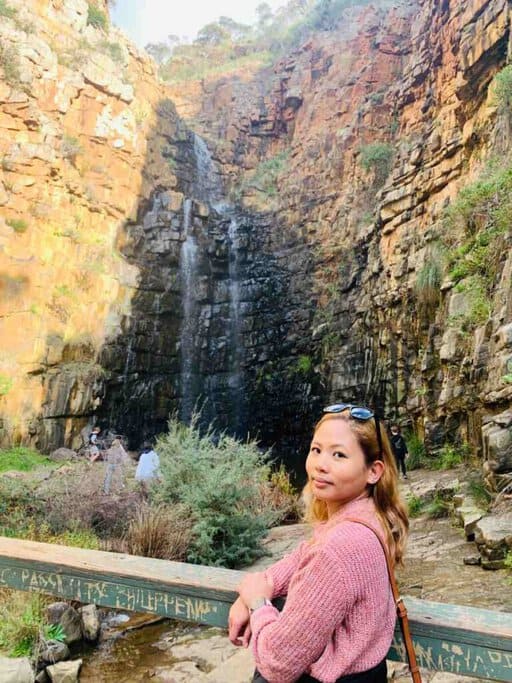
Morialta Conservation Park has three waterfalls along Fourth Creek, ten minutes from the CBD, and entry is free.
The easiest option is the 1.6km Valley Walk to the base of the first fall, stroller-friendly and about 30 minutes each way.
I’ve walked as far as the second falls with my own kids, and it’s an easy one for them the whole way.
The full loop past all three waterfalls takes 60 to 90 minutes, with rugged gorge scenery and views back over the Adelaide plains.
Winter and spring bring the strongest flow, and the car park fills fast on weekends, so an early start matters.
I’ve spotted koalas in the trees more than once on the way up to the second falls.
Waterfall Gully to Mount Lofty Summit
This is Adelaide’s signature hike, and locals use it as their personal fitness test.
I’ve done it myself, and the steep sections heading up test your legs more than the distance suggests, but it’s worth finishing.
The direct route from Cleland National Park at Waterfall Gully to the Mount Lofty summit is 3.9km one way, about 7.8km return, and takes most people two and a half to three hours round trip.
It’s graded a hard walk, and around 600,000 people tackle it every year, so Saturday mornings get crowded.
The reward at the top is a panoramic view over the Adelaide Plains, the city and the coast, plus a kiosk at the summit for coffee before the descent.
Belair National Park
Belair National Park is 25 minutes from the city and has 11 walking trails to choose from.
Entry is free on foot or by bike, with a vehicle fee for cars.
The Waterfall Hike is the toughest of the lot, a 6.5km loop through the old Echo Tunnel under the railway line and up to two seasonal waterfalls, rated 5 out of 5 for difficulty.
Families after something gentler have several shorter loops near the old railway station to pick from instead.
Cycling and the River Torrens Linear Park Trail
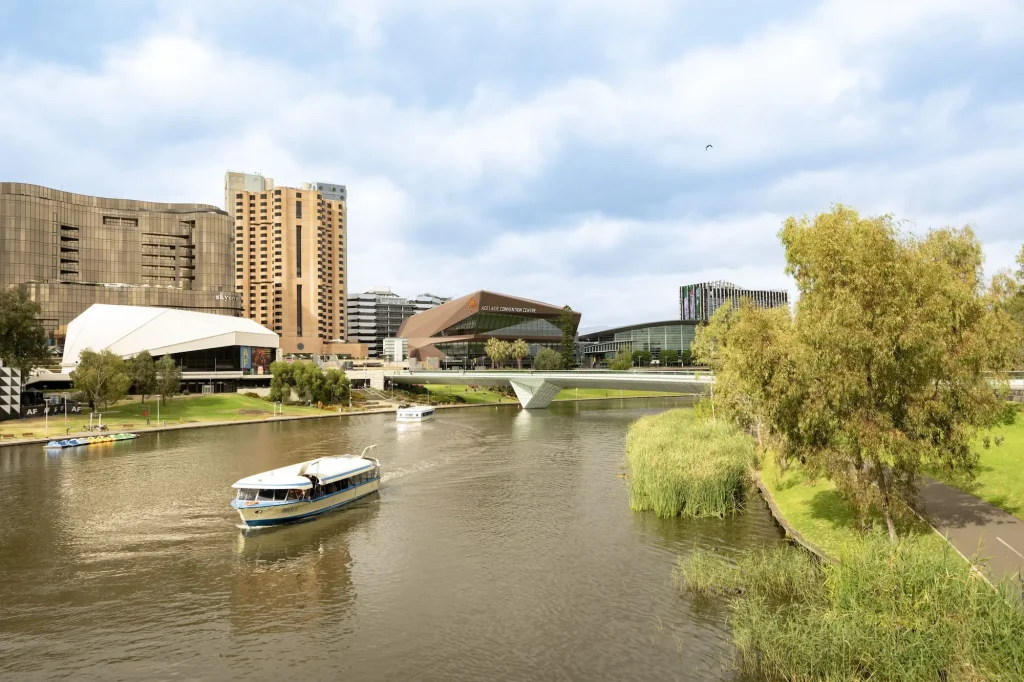
The River Torrens Linear Park Trail runs around 30km from Athelstone in the foothills to Henley Beach on the coast, flat, sealed and free the whole way.
Most people ride a section rather than the full length, either through the Adelaide Park Lands and city, or the quieter run out past West Beach.
Bike hire is available at a few points along the trail for anyone without their own, which makes this one of the easiest ways to see Adelaide’s outdoor side without any real planning.
Kayaking and Paddling Adelaide’s Waterways
Kayaking in Adelaide isn’t limited to the coast; the River Torrens and the mangroves north of the city both work well.
Anyone with their own kayak or paddleboard can launch into the calmer stretches of the Torrens near the city for free, no booking required.
A guided kayak tour along the river covers the parklands and a different view of Adelaide Oval than you get from the street, with no experience needed.
For something wilder, Dolphin Sanctuary Kayak Tours run out of Garden Island, about 30 minutes from the CBD, through a 10,000-year-old mangrove forest where dolphins are spotted year-round, though never guaranteed.
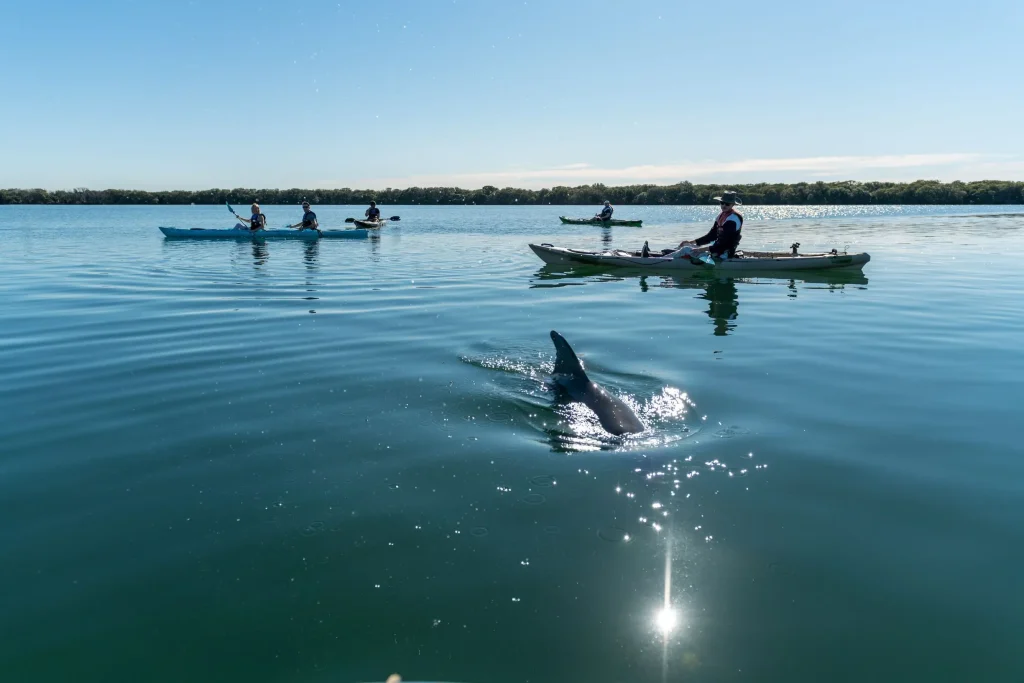
Tours run as a 2-hour twilight paddle or a 3-hour guided eco tour, with a separate trip out to the Ships Graveyard shipwrecks for anyone chasing that specifically.
Snorkelling and Diving South of Adelaide
I live just south of Adelaide, on the Fleurieu Peninsula side, and this stretch of coast has some of the best free snorkelling in the state.
Port Noarlunga Reef has a proper snorkel trail with twelve underwater markers, set up back in 1994, a short swim out from the jetty.
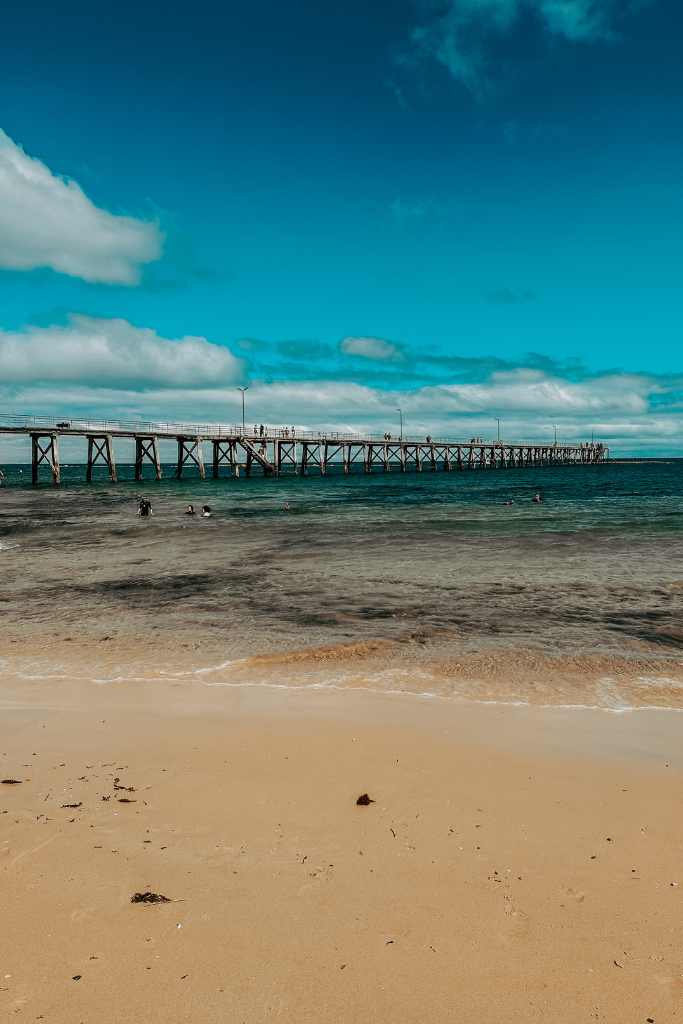
The south side of the jetty is the best spot for beginners, with zebrafish, old wives and sea stars close to shore.
Further south, Aldinga Reef is one of the oldest marine sanctuaries in the state, and at low tide the exposed reef can be reached on foot straight off the beach.
Snorkellers who swim further out sometimes spot Port Jackson sharks, eagle rays and wobbegongs, all harmless to swimmers.
Both spots are best on a calm day with good visibility, generally over the warmer months from November to April.
Port Noarlunga and Aldinga Beach both get busy over summer, so an early start beats the afternoon crowds.
Coastal Walks and Adelaide’s Beaches
The newest addition to this stretch of coast is the Witton Bluff Base Trail, a 1.1km fully accessible boardwalk and path connecting Christies Beach to Port Noarlunga, finished in 2025.
It’s flat, wide and works for prams, wheelchairs and bikes, a good option for young kids or anyone who finds soft sand hard going.
Sunset is the best time to walk it; the light over the water here is something else.
Further north, Hallett Cove Conservation Park has a boardwalk trail through some of the best-preserved glacial rock formations in the country, a 2km loop that takes about an hour.
For a straightforward beach day, Glenelg still does the job, with swimming, paddleboarding and a tram straight into the city, no car needed.
Mountain Biking in the Adelaide Hills
Kuitpo Forest is South Australia’s most popular mountain biking spot, 45 minutes from the city.
Trails range from Dad’s Loop for beginners through to the Tinjella (12km) and Onkeeta (11km) trails through pine plantation and native wetlands.
The tracks aren’t signposted, so a downloaded trail map beats relying on phone signal once inside the forest.
The same forest also has TreeClimb Kuitpo, an aerial obstacle course with zip lines and a rope course over the Heysen Trail, a solid family option if mountain biking isn’t for everyone in the group.
Adventure Tours Worth Paying For
Not everything worth doing in Adelaide is free, and a few paid experiences earn their price tag.
Adelaide Oval RoofClimb takes visitors up onto the stadium roof for a view over the whole city, a two-hour guided climb with a harness and safety briefing included.
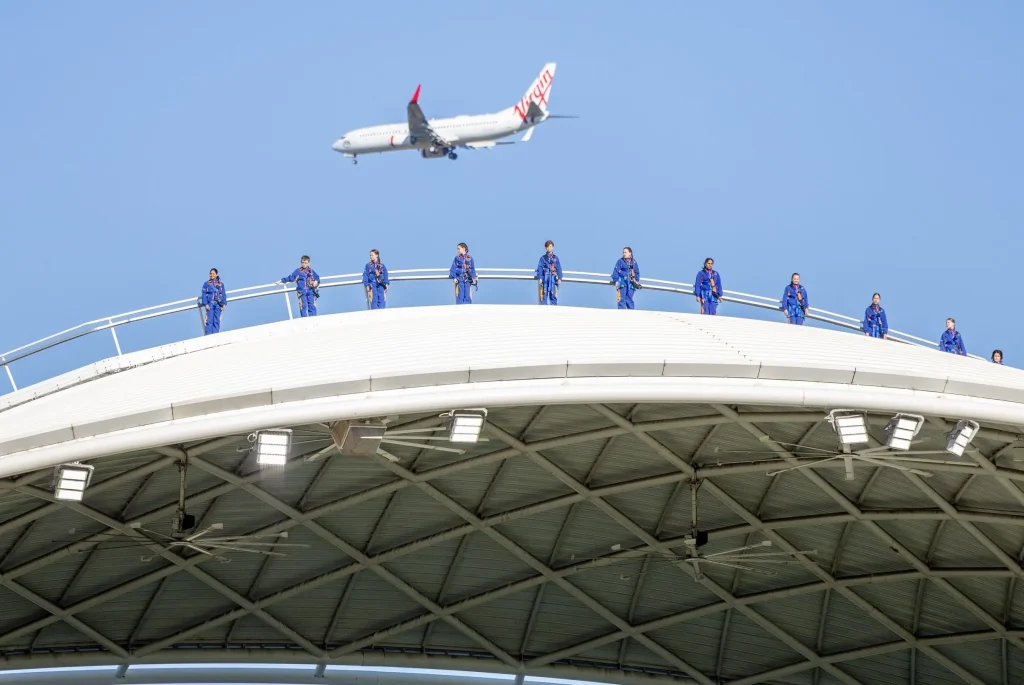
It’s mid-range rather than cheap, and the view over the city and coast justifies it for a first-timer’s budget.
Abseiling at Morialta pairs the same conservation park mentioned above with a guided descent down the cliff face, spotting koalas in the trees on the way.

Skydiving at Goolwa is about 83km from Adelaide and lands on Basham Beach after a tandem jump, one of the pricier options here and better suited to a bucket-list splurge than a casual afternoon.

The Mount Lofty Descent Bike Tour starts at the summit and rides downhill through the hills, stopping at Cleland Wildlife Park along the way, with gear and transport included.
It suits a shorter, adrenaline-lite outing rather than committing to a full day on one activity.
Wildlife Encounters Near Adelaide
Cleland Wildlife Park is open daily from 9.30 am to 5 pm, closed only on Christmas Day and days of catastrophic fire danger.
It sits in the Adelaide Hills near the Mount Lofty summit, so it pairs easily with the hike above for a full day out.
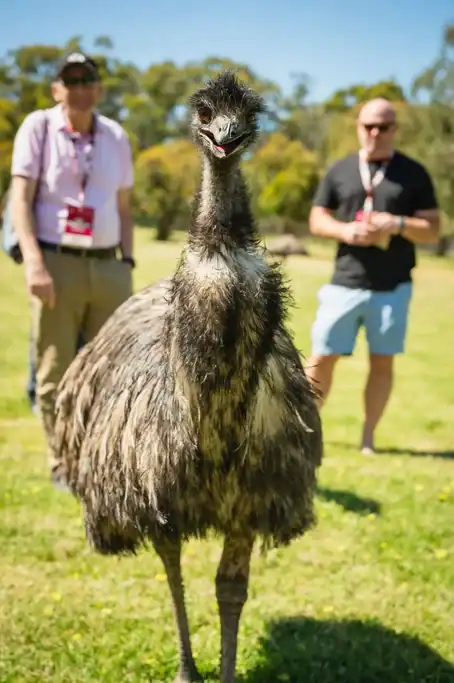
Koalas, kangaroos, wallabies and Tasmanian devils are all on site, and most enclosures allow visitors to get close without a barrier in between.
Best Time of Year for Adelaide’s Trails and Beaches
Spring, from September to November, and autumn, from March to May, are the best months for hiking and cycling, with mild days and green hills after winter rain.
Summer suits the coast better, snorkelling and swimming included, though the Adelaide Hills trails get hot and exposed by midday.
Winter brings the waterfalls at Morialta and Belair to their fullest flow, worth it for anyone who doesn’t mind a cooler, wetter walk.
For a bigger trip beyond the city, Kangaroo Island and the Flinders Ranges both extend the same free-to-explore approach, just with more driving involved.
Know Before You Go
✅ Parking fills fast at Morialta and Waterfall Gully on weekends; arriving before 9 am gets a spot close to the trailhead.
✅ Belair National Park charges a vehicle entry fee, but walking or cycling in is free.
✅ Mobile reception drops out in parts of Kuitpo Forest and Onkaparinga River National Park; offline maps are worth downloading beforehand.
✅ Snorkelling conditions depend on tide and wind; a swell forecast is more useful than the standard weather app.
✅ Total Fire Ban days close some parks and trails entirely, including TreeClimb Kuitpo, so alerts are worth checking in summer.
✅ Prams and wheelchairs get the most reliable access at the Witton Bluff Base Trail and the Morialta Valley Walk, both flat and sealed.
✅ A full weekend here costs nothing if you stick to the hikes, reefs and river trail and skip the paid tours altogether.
For a full breakdown of how to fit these into a longer stay, my Adelaide itinerary covers where to base yourself and how many days are actually worth planning for.
Anyone heading further down the coast afterwards should see things to do on the Fleurieu Peninsula, which picks up where Port Noarlunga and Aldinga leave off. For the rest of the state, the South Australia hub has everything else worth seeing.
