
Things to Do in Brisbane – The List Most Visitors Miss

Australia Travel Hub contains affiliate links and is a member of the Amazon Services LLC Associates Program. If you make a purchase using one of these Amazon links, we may receive compensation at no extra cost to you. See our Disclosure Policy for more information.
Brisbane doesn’t get the hype Sydney and Melbourne do, and that works in your favour.
Brisbane’s best attractions range from a free swim at a man-made beach in the CBD to koala cuddles twenty minutes from your hotel, and most of it doesn’t cost a cent if you time it right.
Free Brisbane Attractions You Shouldn’t Skip
Brisbane is generous with free attractions, which helps if you’re travelling on a budget or just don’t want to blow the whole trip on entry fees.
South Bank Parklands sits right across the river from the CBD and costs nothing to wander through. The parklands stretch along the riverfront with shaded paths, public art and river views, and it’s an easy first stop after you land.
Streets Beach, the man-made swimming lagoon inside South Bank, is a genuine Brisbane icon – it’s closed for maintenance from mid-June until late August 2026, so check the South Bank site before you plan your day around it.
The neighbouring Boat Pool and Aquativity water park stay open in the meantime.
Right next door, the Queensland Art Gallery and Gallery of Modern Art (QAGOMA) offer free entry to the permanent collection and most exhibitions. Volunteer guides run free 40-minute tours most days if you want context rather than just wandering the rooms.
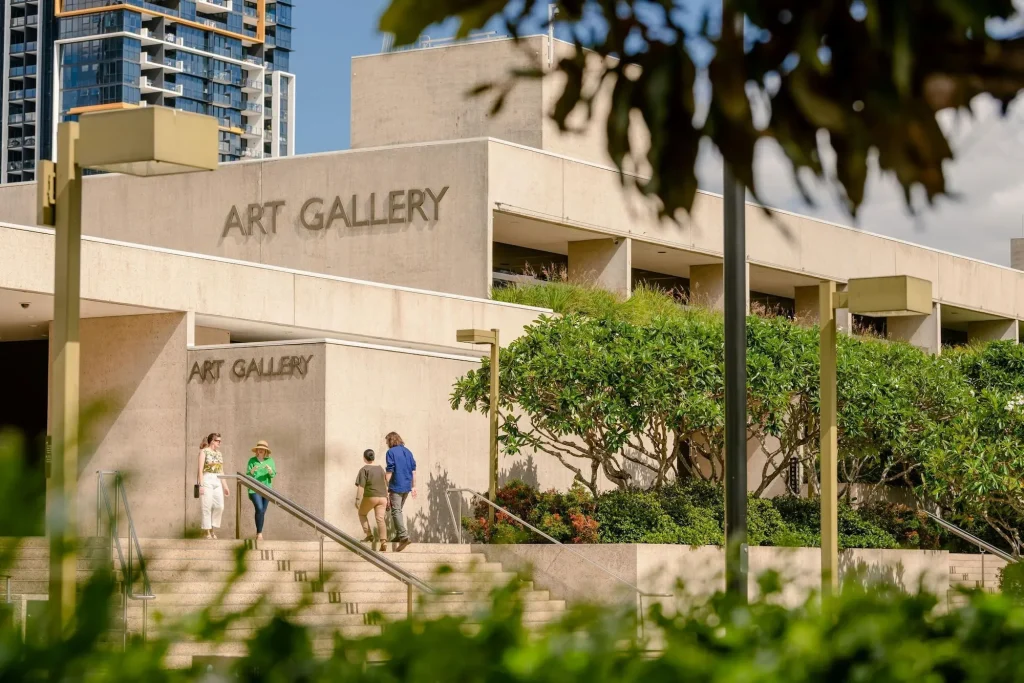
The same Cultural Centre precinct is also home to QPAC, Queensland’s main performing arts venue. Shows are ticketed, but it’s worth checking what’s on across its five theatres if you fancy a night of theatre, music or comedy while you’re in the area.
The Queensland Museum Kurilpa, also in the Cultural Centre at South Bank, is free to enter and has a hands-on Dinosaur Garden that kids in particular love. The paid SparkLab science centre sits alongside it if you want something more hands-on.
Further out, Brisbane Botanic Gardens at Mount Coot-tha cover 56 hectares and cost nothing to enter.
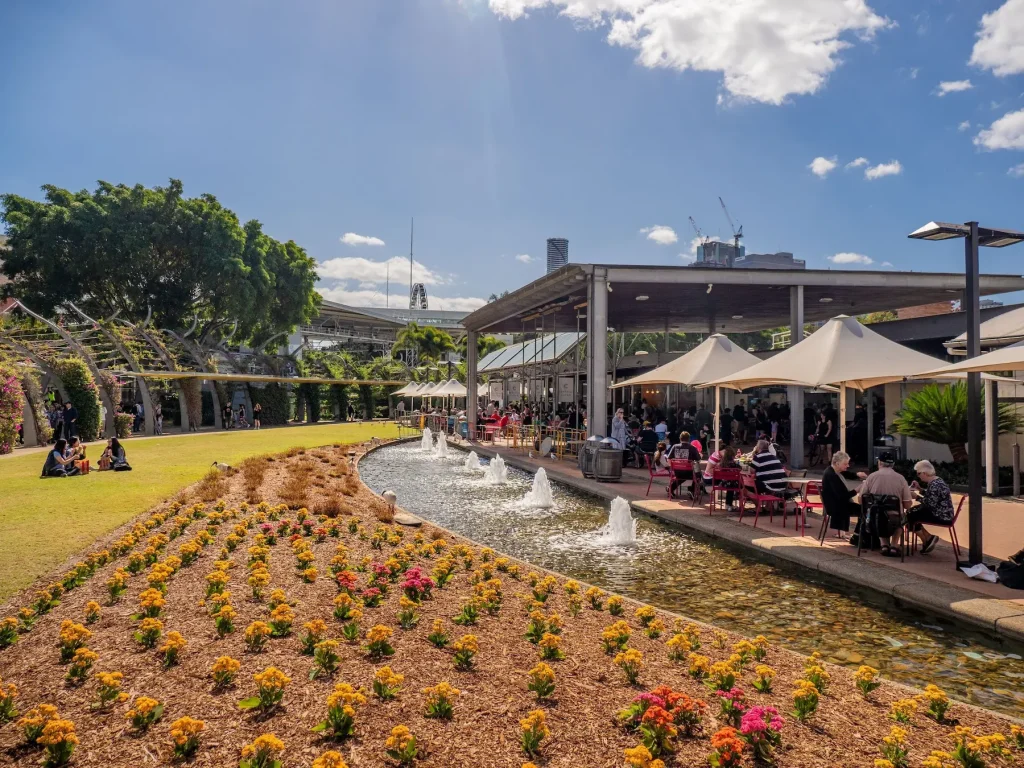
There’s a Japanese Garden, a Tropical Dome, and a genuinely excellent lookout with views over the whole city and out to Moreton Bay on a clear day – parking on site is free too.
Museum of Brisbane, inside City Hall at King George Square, is free to enter and gets skipped by a lot of visitors who stick to South Bank.
Book ahead for the free Clock Tower Tour, a 15-minute ride up one of the city’s oldest working cage lifts to a 76-metre viewing platform.
New Farm Park, a short CityCat ride from the CBD, is one of Brisbane’s oldest and largest parks, with jacaranda trees that turn purple every October and November.
The Brisbane Powerhouse next door runs free exhibitions alongside its ticketed shows.
Roma Street Parkland, right behind Central Station, is the world’s largest subtropical garden in a city centre and stays open around the clock. There are free barbecues and picnic spots if you want to stop for lunch.
Brisbane’s weekend markets are worth building a morning around. West End’s Davies Park Market runs every Saturday from 6 am under a canopy of fig trees, the City Botanic Gardens hosts a Sunday market from 8 am, and Reddacliff Place in the CBD runs a Wednesday lunchtime market if you’re only around midweek.
At Wellington Point, about 40 minutes from the city, you can walk out to King Island across the sand at low tide – it’s roughly a kilometre each way, so check tide times before you go, and kids tend to love spotting the crabs left behind by the receding water.
Queen Street Mall, Brisbane’s open-air CBD shopping strip, costs nothing to wander even if you don’t buy anything.
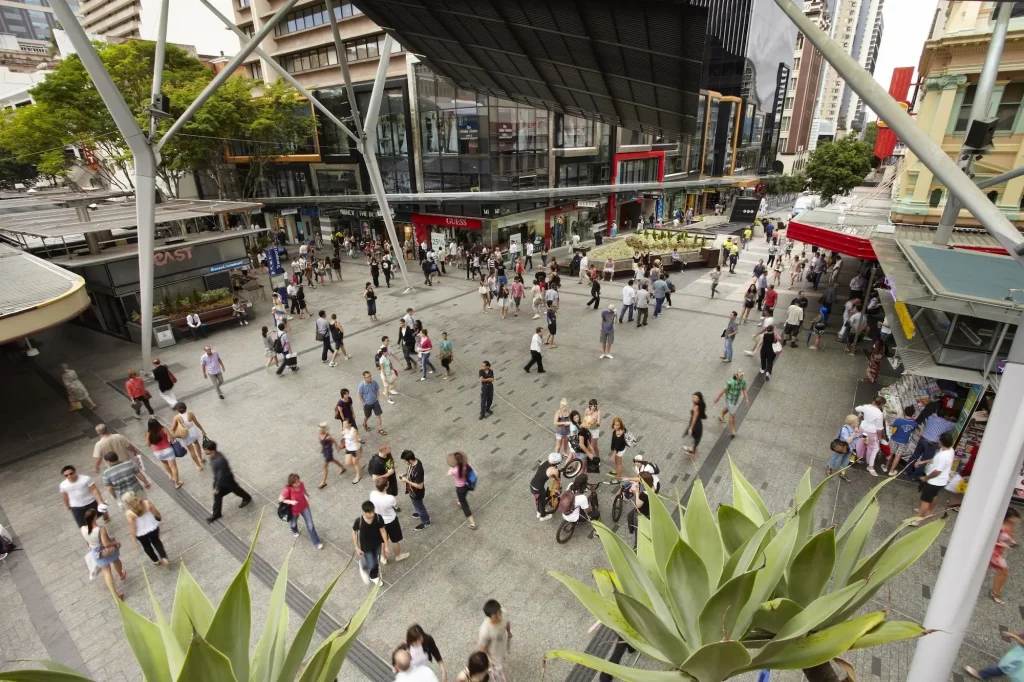
It’s home to more than 500 stores plus two heritage-listed arcades, Brisbane Arcade and Tattersall’s Arcade, worth a look for the architecture alone.
Best Brisbane Attractions for First-Time Visitors
If it’s your first trip and you want the things everyone talks about, start here.
The Story Bridge Adventure Climb takes you 80 metres above the Brisbane River on a guided climb up the city’s heritage-listed bridge, with climbs running at dawn, day, twilight, night and full moon, rain or shine.
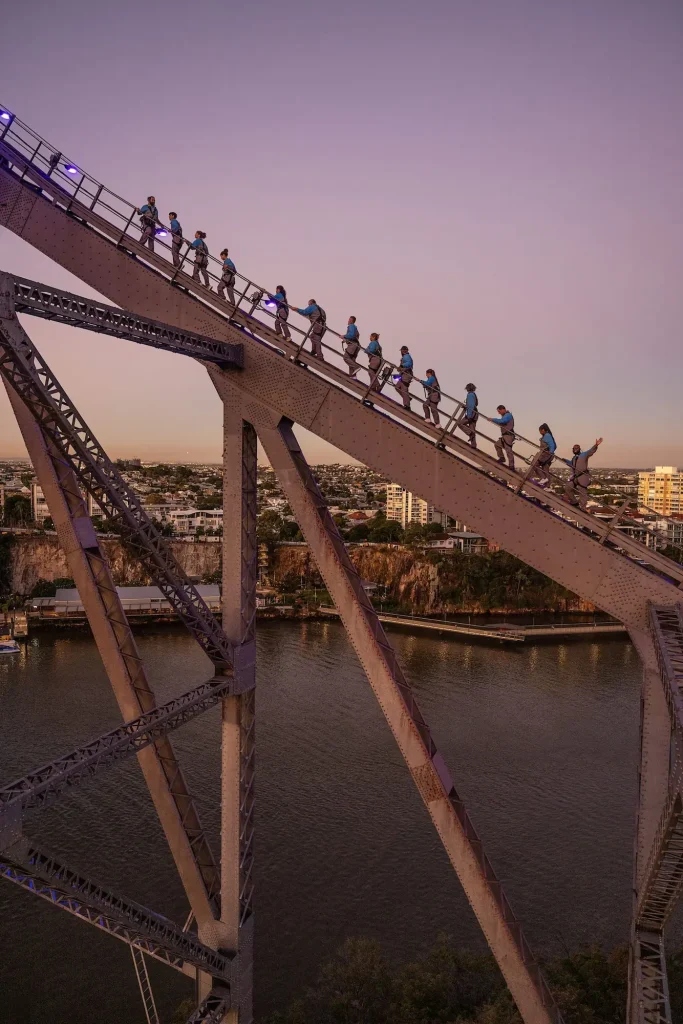
It’s the world’s first wheelchair-accessible bridge climb, worth knowing if that matters for your group. 👉 Book the Story Bridge Climb here
The operators launched a new Story Bridge Swing in August 2026 for anyone who wants more than a climb – it’s a step-off-the-platform swing that leaves you dangling 80 metres above the city.
If you’d rather skip the fee altogether, you can simply walk across the Story Bridge itself for free.
Opened in 1940 and standing 74 metres tall, it connects Fortitude Valley to Kangaroo Point and gives you a proper look at the bridge’s engineering without booking anything.
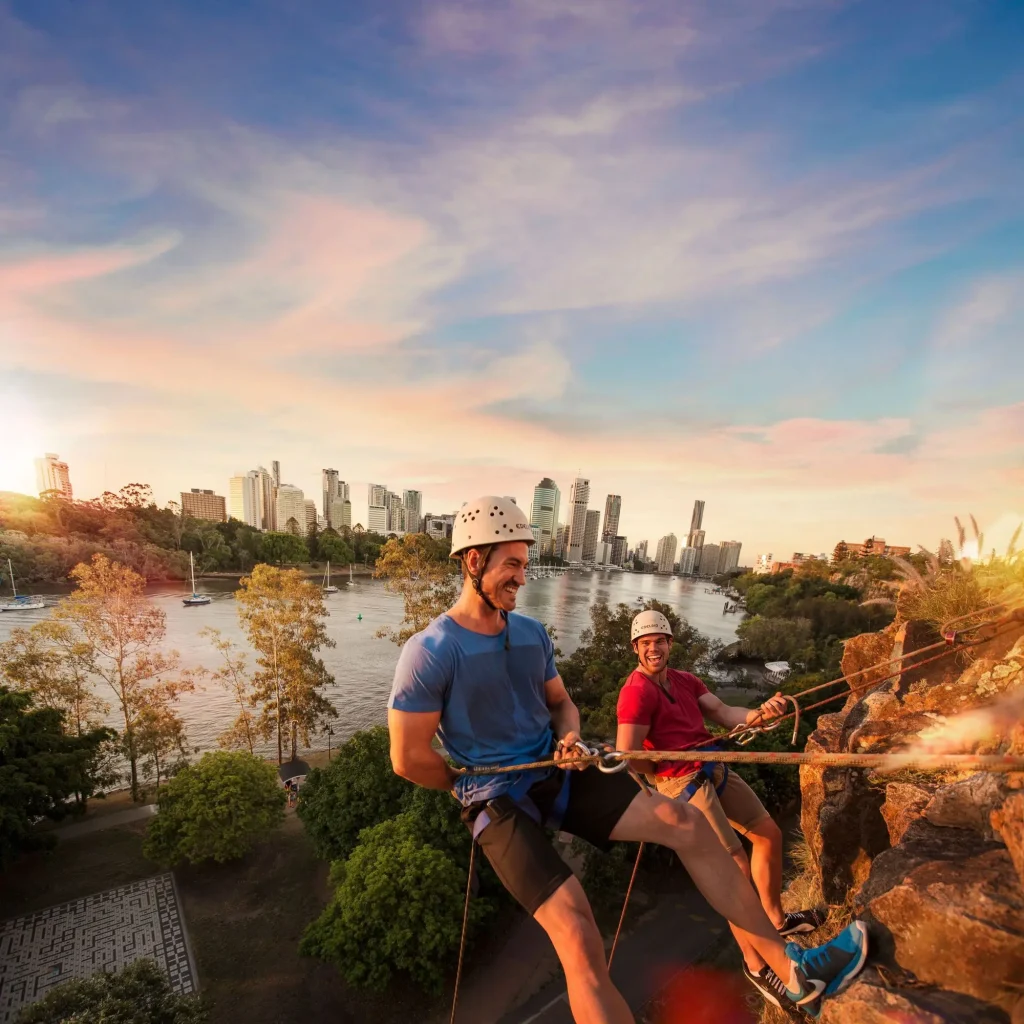
Kangaroo Point Cliffs, a short walk or ferry ride from the CBD, give you free river views without paying for anything – or you can abseil the 20-metre cliff face; no experience needed.
Twilight abseiling runs Friday and Saturday nights if you want the version with better light.
The Kangaroo Point Bridge, a 460-metre pedestrian and cycle bridge that opened in December 2024, now connects the cliffs straight to the City Botanic Gardens on the CBD side. It’s a genuinely pleasant walk between the two without doubling back through traffic.
South Bank itself deserves a proper half-day rather than a quick walk-through – between the parklands, the galleries and the riverside dining strip, it’s easy to lose an afternoon there without meaning to.
Where to See Wildlife Near Brisbane
Lone Pine Koala Sanctuary is the world’s oldest and largest koala sanctuary, running since 1927, and it’s genuinely worth the trip rather than a tourist-trap add-on.
It’s about 12km from the CBD and home to more than 100 koalas, plus kangaroos, wombats and other native species you can get close to.
The sanctuary is open daily from 9 am to 5 pm, with last entry at 4 pm, and hours are reduced on Anzac Day and Christmas Day. Go early if you want the koalas at their most active, since they sleep for most of the day.
If you’d rather skip the entry fee, Daisy Hill Koala Centre in Logan is free to visit and about 25km south of the city, with free parking on site.
Wildlife officers run 20-minute talks daily at 11 am and 2 pm, and it’s a lower-key alternative if you’re watching the budget.
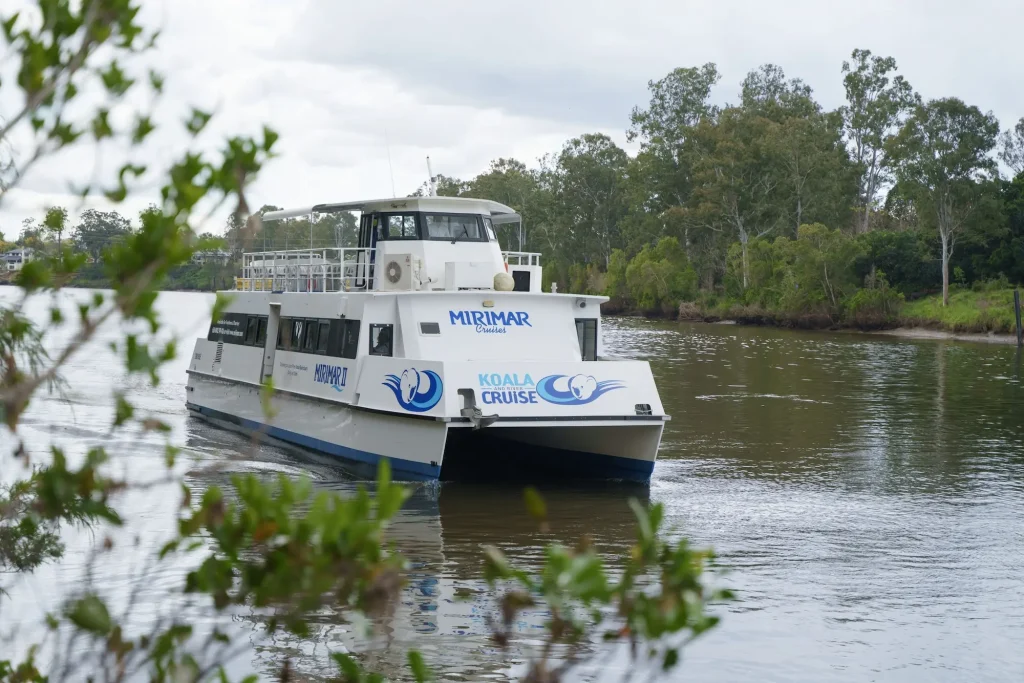
For a scenic way to reach Lone Pine, Mirimar Cruises run a river cruise from the Cultural Centre Pontoon at South Bank with sanctuary entry included in the fare. It takes a little over an hour each way past riverside suburbs you won’t see from the road.
👉 Get your Brisbane River Cruise Ticket here
For something free and properly local, head to Graceville Park at dusk to watch the flying fox colony stream off Indooroopilly Island across the river.
It’s one of Australia’s largest colonies, with numbers climbing into the hundreds of thousands over summer.
Best Brisbane Activities for Families
Families have more options here than the attraction lists usually let on.
- Streets Beach and Aquativity at South Bank – free, patrolled, and built for exactly this (check current status before you go, see above)
- Bluey’s World at Northshore Pavilion in Hamilton – a fully immersive, guided walk through the Heeler family’s house and backyard, now confirmed to run in Brisbane until early 2028
- A CityCat ferry ride – genuinely counts as an activity with younger kids, and it’s a cheap way to see the river
- Lone Pine Koala Sanctuary – see above, always a hit with kids
If you’re travelling with a toddler or an easily tired group, build your day around one or two of these rather than trying to stack all four in – Brisbane’s heat and humidity add up faster than you’d expect.
Brisbane’s Food, Markets and Nightlife
Brisbane’s food and drink scene has grown up a lot in the last few years, and it’s spread across more than just the CBD.
Eat Street Northshore turns a disused wharf in Hamilton into a night market most weekends, with more than 70 traders across six continents’ worth of food and free entry for kids under 13.
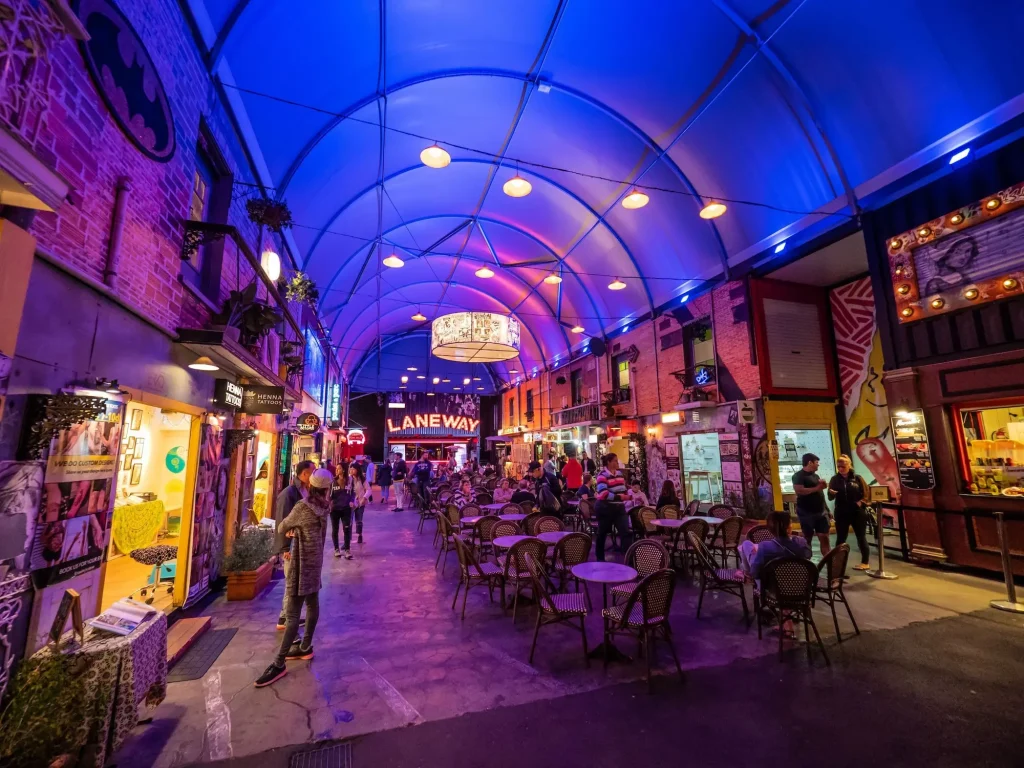
It’s open Friday, Saturday and Sunday nights, and the easiest way there is by CityCat to the Northshore Hamilton terminal.
Fortitude Valley is where most of the late-night bars and live music venues cluster, while West End across the river leans more into cafes, indie shops and a slower daytime pace – pick whichever matches your evening plans.
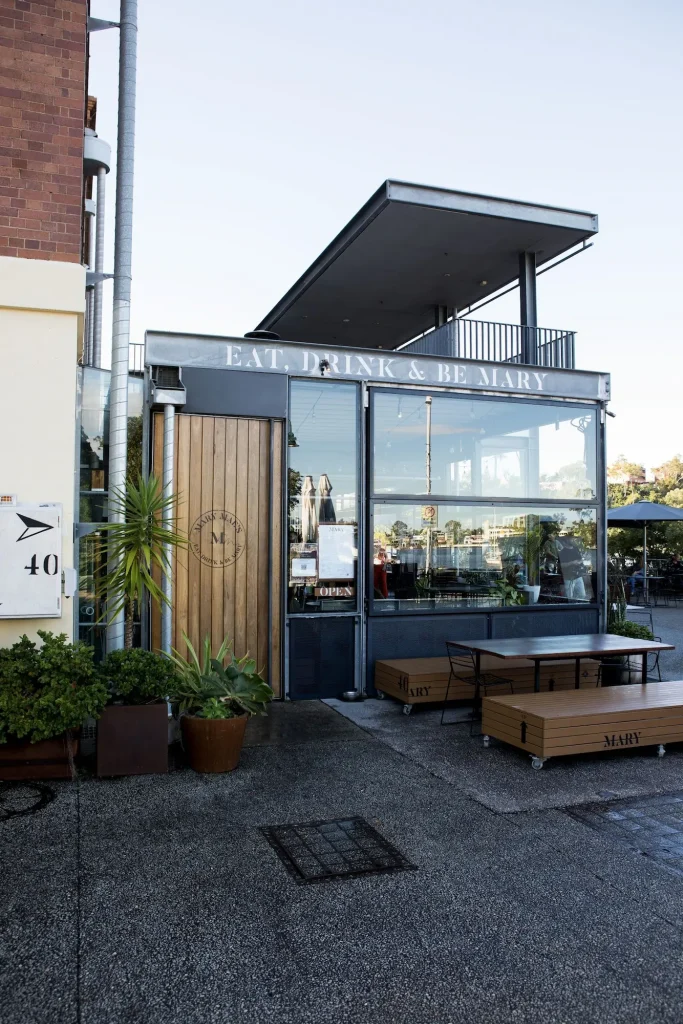
Howard Smith Wharves, tucked under the Story Bridge, is home to Felons Brewing Co and a handful of riverside restaurants with some of the best sunset views in the city. It’s about a 10-minute walk from the CBD along the river, no car needed.
Queen’s Wharf, the newer riverside precinct by the casino, has a free rooftop Sky Deck 100 metres up with 360-degree views. Cicada Blu is the pick for evening drinks; Babblers is quieter if you want breakfast with the view instead.
For rooftop drinks with a view, check ATH’s guide to the best rooftop bars in Brisbane, and if beer’s more your thing, Brisbane’s brewery tours cover the scene properly.
Getting Around Brisbane Without a Car
You genuinely don’t need a car for most of this list.
Brisbane runs on the Go Card, the tap-on smartcard covering buses, trains, ferries and the CityGlider services.
All Translink ferries and CityCats charge a flat fare when you tap on and off, and you can check current fares and routes on the Translink site.
The CityCat network has 22 terminals running from the University of Queensland at St Lucia out to Northshore Hamilton, and it’s one of the nicer ways to see the river without paying for a dedicated cruise.
If you are driving, most attractions listed here have paid parking nearby, though parking at Mount Coot-tha is free.
Best Day Trips from Brisbane
Once you’ve covered the city itself, Brisbane is a solid base for exploring the wider region – Queensland has a lot packed within a couple of hours’ drive.
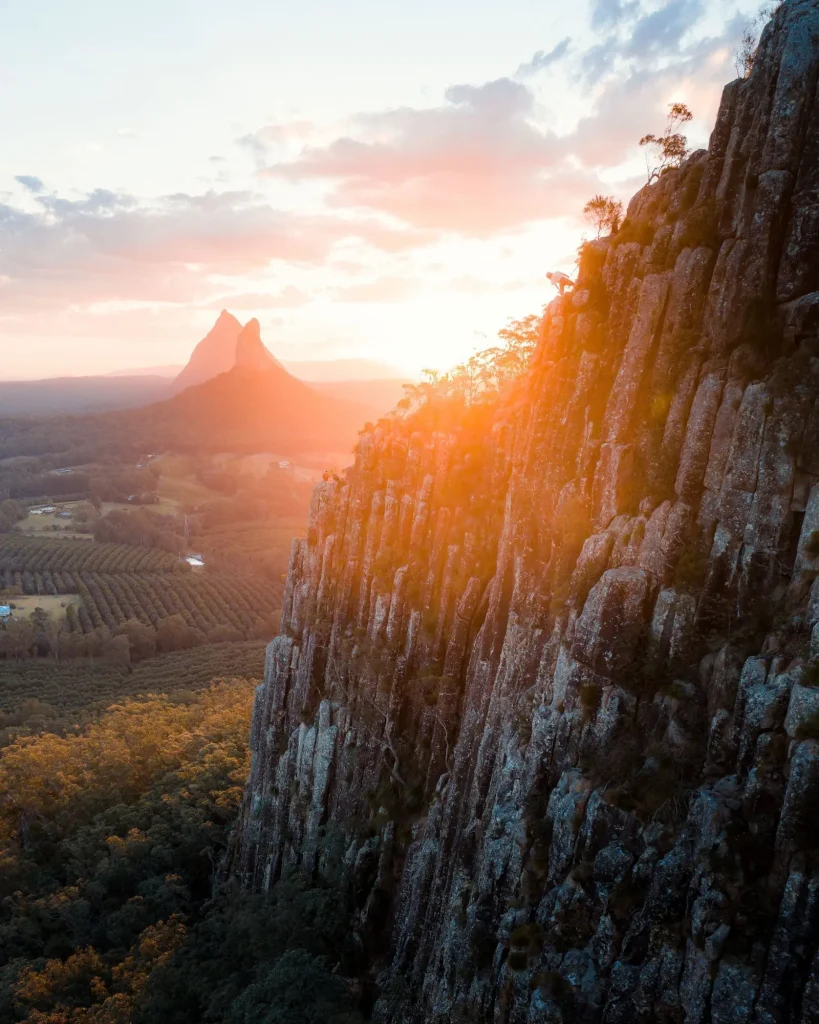
✔️ Glass House Mountains – about an hour north via the Bruce Highway and Steve Irwin Way, with a lookout day-use area and fire tower views over the volcanic peaks
✔️ Scenic Rim and Lamington National Park – roughly 90 minutes south, part of the Gondwana Rainforests World Heritage area, with waterfalls and proper bushwalking trails
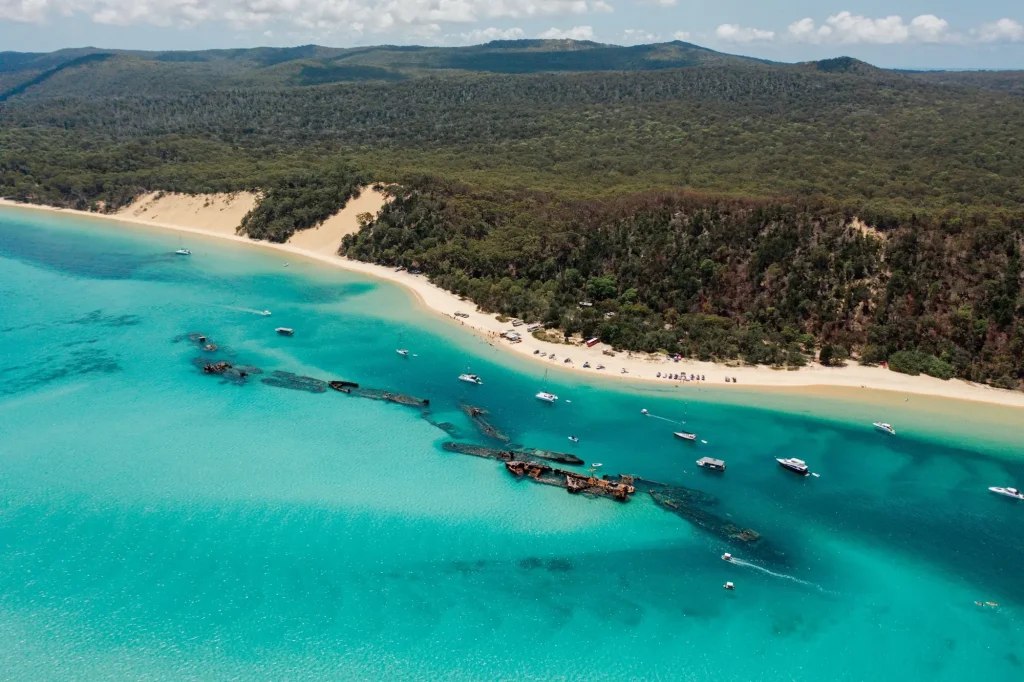
✔️ Moreton Island – a ferry trip out to sand dunes, shipwrecks and some of the best snorkelling near Brisbane
✔️ Gold Coast theme parks – about an hour south if you want rollercoasters and water slides for a full day out
✔️ North Stradbroke Island – train to Cleveland then a ferry across, about two hours door to door, for beaches, wild koalas and the Gorge Walk at Point Lookout
For a longer loop covering several of these plus more, ATH’s guide to road trips from Brisbane lays out a few different routes depending on how many days you’ve got.
Best Time to Visit Brisbane for Sightseeing
Brisbane’s subtropical climate means there’s no genuinely bad time to visit, but some seasons make sightseeing easier.
Winter (June to August) is actually peak season here – dry, sunny and mild, rarely dropping below the mid-teens, which makes it the best stretch for walking tours and outdoor days.
Autumn (March to May) and spring (September to November) both offer warm days with less humidity than summer.
Summer (December to February) brings heat, humidity and afternoon storms, but also the cheapest accommodation rates if you don’t mind the trade-off.
If you can time your trip for early September, Brisbane Festival runs city-wide events from the 4th to the 26th, and Riverfire kicks it off on the 5th with a free fireworks display over the river.
It’s the single biggest weekend on Brisbane’s events calendar, so book accommodation early if you want to be in town for it.
How Many Days You Need to See Brisbane Properly
Two full days cover the highlights – South Bank, the Story Bridge Climb and one wildlife stop. Three to four days let you add a day trip and slow down the pace instead of rushing between attractions.
If you’re combining Brisbane with the wider region, our Brisbane itinerary breaks down exactly how to spend three to four days without wasting time backtracking across the city.
Know Before You Go
A few practical things that’ll save you a wasted trip.
✅ Book the Story Bridge Climb and Lone Pine ahead in school holiday periods; both get busy and sell out same-day slots
✅ Sun protection matters more than you’d think – Brisbane gets around eight hours of sun a day thanks to the subtropical climate, even in winter
✅ Check Streets Beach status before you go – it’s currently closed for maintenance, so don’t build a whole afternoon around it without checking first
✅ Public transport beats driving for anything inside the CBD and South Bank – parking fills up fast, and a Go Card is cheaper than most all-day parking rates
✅ Pack for both heat and sudden rain in summer – afternoon storms roll in fast between December and February
✅ Solo travellers find Brisbane easy to navigate alone – South Bank, the CityCat and the CBD galleries all feel comfortable without company, and hopping between CityCat terminals is a relaxed way to fill a spare afternoon
✅ Couples after something quieter should aim for a twilight or full moon Story Bridge climb, or a sunset walk along the Kangaroo Point cliffs; both give you the view without the daytime crowds
✅ Budget travellers can build a full day out of South Bank, QAGOMA and Mount Coot-tha without spending anything beyond transport, then splash out on one paid attraction like the koala sanctuary or the bridge climb
✅ Book a free Brisbane Greeters walking tour if you want a local’s take on the city – small groups, 2 to 3 hours, led by volunteers who know their patch properly
