
Camping in Flinders Ranges – What to Book, What’s Free, What to Know

Australia Travel Hub contains affiliate links and is a member of the Amazon Services LLC Associates Program. If you make a purchase using one of these Amazon links, we may receive compensation at no extra cost to you. See our Disclosure Policy for more information.
Camping in Flinders Ranges means red gorge walls at sunrise, campfires under some of the clearest night skies in South Australia, and a real choice between fully-serviced grounds and free bush sites with nobody else around for kilometres.
I’ve pulled together the campgrounds worth booking, the free ones worth knowing about, and everything you need to sort before you go.
On my last trip up this way I hadn’t planned ahead, and when I checked Wilpena Pound campground there was no availability left.
Blinman Cottage was one of the few places nearby with a room free, so that’s where I ended up staying instead of camping the whole trip.
It’s a tiny town, home to only a few dozen people, but it’s officially the highest town in South Australia.
Best Campgrounds Inside Ikara-Flinders Ranges National Park
Most people camping in the Flinders Ranges base themselves inside Ikara-Flinders Ranges National Park, and it’s easy to see why. The scenery does most of the work for you.
These are the sites I’d actually book.
✅ Wilpena Pound Campground – the only accommodation sitting inside the national park itself, run privately through Wilpena Pound Resort.
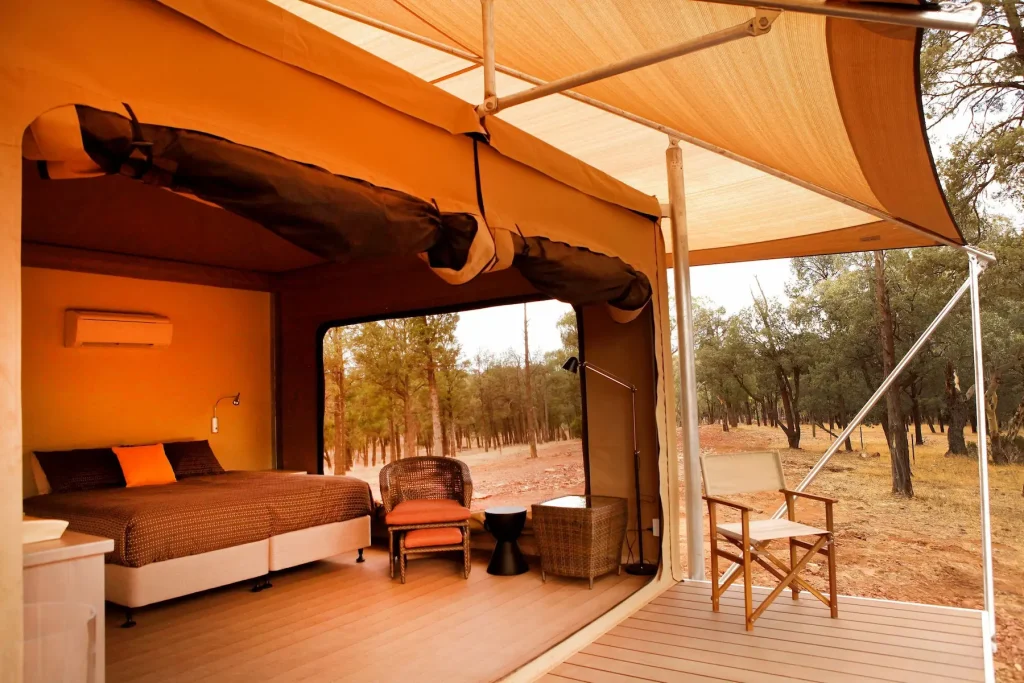
Photo Credit: Anthology Travel
It has powered and unpowered sites, a pool, a camp kitchen, a small general store and a restaurant. Good for families or first-timers who want a soft landing before the more remote sites.
✅ Trezona Campground – on Brachina Gorge Road, a short walk from the Ediacaran Golden Spike geological site. Good base for the Brachina Gorge loop walks.
✅ Brachina East Campground – split across two creek crossings, with some sites 2WD-accessible and others needing a 4WD to reach. Quiet, shaded, and close to the Brachina Gorge Geological Trail.
✅ Acraman Campground – small and simple, near Bunyeroo Gorge on the way to Brachina Gorge. A good spot to use as a base for day trips rather than a destination in itself.
✅ Koolamon Campground – one of the larger sites, with barbecue plates and a mix of 2WD and 4WD access. Popular with birdwatchers in spring and autumn.
✅ Aroona Campground – further north, near the old Aroona homestead ruins, with rugged views over the ABC Range.
All of these sit within the national park boundary, so you’ll need both a park entry permit and a separate camping permit, which I’ve covered further down.
Bookings and current site fees are handled through the national park’s official booking pages, and I’d check there directly rather than trust an old blog post for pricing, since fees do change.
Free Camping in the Flinders Ranges
If you don’t need showers and power, there’s some properly good free camping in the Flinders Ranges, mostly on the fringes of the national park rather than inside it.
✅ Parachilna Gorge, along Parachilna Gorge Road between Blinman and Parachilna township, is the best-known option.
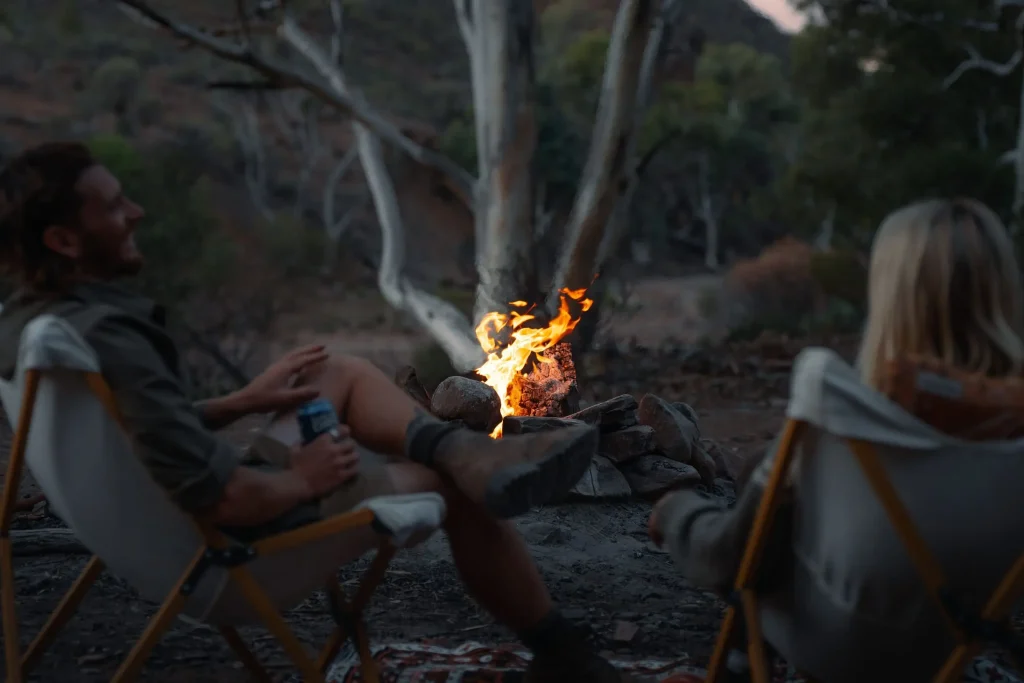
It’s a long stretch of creek-side bush camping under river red gums, with dozens of informal sites spread out so you’re rarely camping right on top of anyone else.
There are no facilities, so you’re bringing your own toilet setup and packing out every scrap of rubbish, and it’s worth knowing some of the sites nearest the entrance sit down a steep slope that’s a headache to drive back up in a low-clearance car.
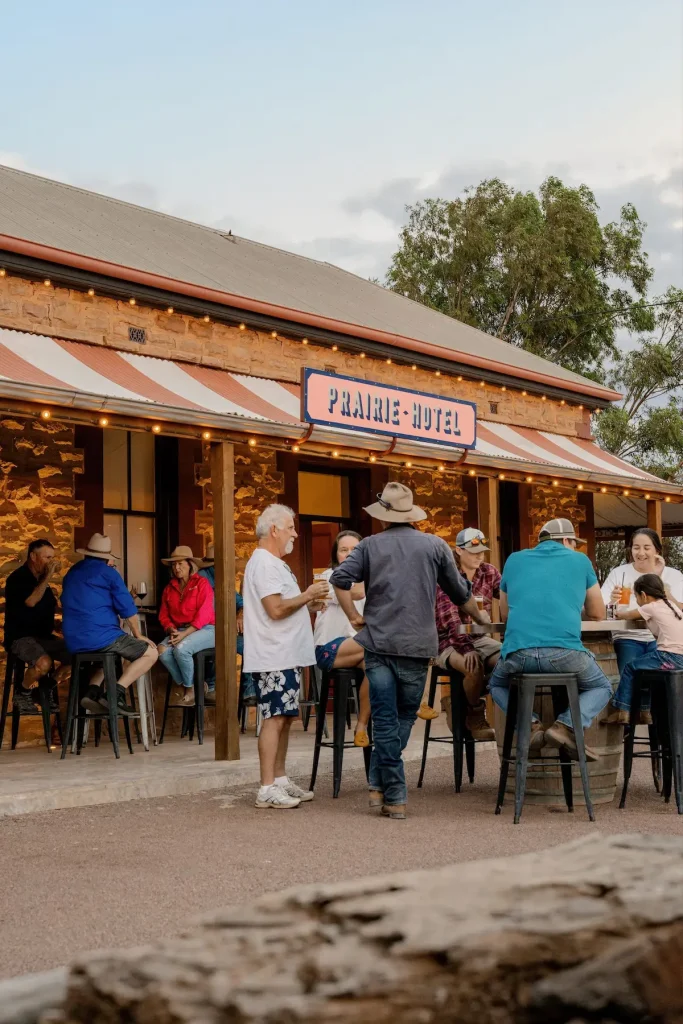
The Prairie Hotel at Parachilna township is a short drive away if you fancy a proper pub meal instead of cooking over the fire one night.
✅ Hookina Ruins, on Barndioota Road near Hawker, is a smaller free site with the ruins of an old railway settlement as a backdrop. It suits caravans and campervans as well as tents, and pets are allowed here, unlike inside the national park.
✅ Chambers Gorge, off the road between Blinman and Arkaroola, is rougher and quieter again than Parachilna Gorge.
There are no facilities at all, so you need to be fully self-sufficient, but the reward is a short walk into the gorge to see genuine Adnyamathanha rock engravings.
None of these need a booking, but they all fill up over long weekends and school holidays, so I’d get there early in the day rather than counting on a spot after dark.
Camping Outside the National Park – Stations and Private Grounds
If bush camping isn’t your thing, or you want a hot shower after a day of hiking, several working sheep stations and private grounds around the Flinders Ranges take campers.
✅ Rawnsley Park Station, on the southern side of Wilpena Pound, has bush camping, powered caravan and camper sites, a pool, a store and a restaurant. It’s a good middle ground between full bush camping and a resort stay.
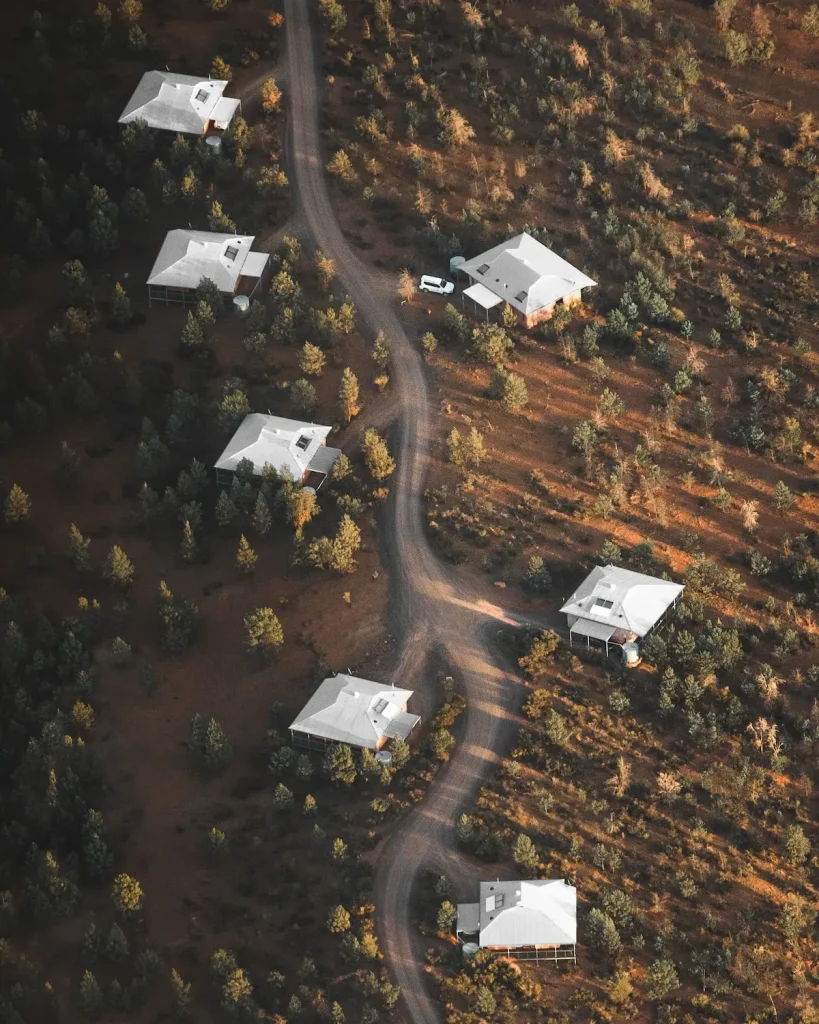
Photo Credit: Zac Watson – @watzac
✅ Skytrek Willow Springs Station, about 21 kilometres north of Wilpena Pound, is a 70,000-acre working station with private and secluded bush campsites plus access to a self-guided 4WD trail across the property.
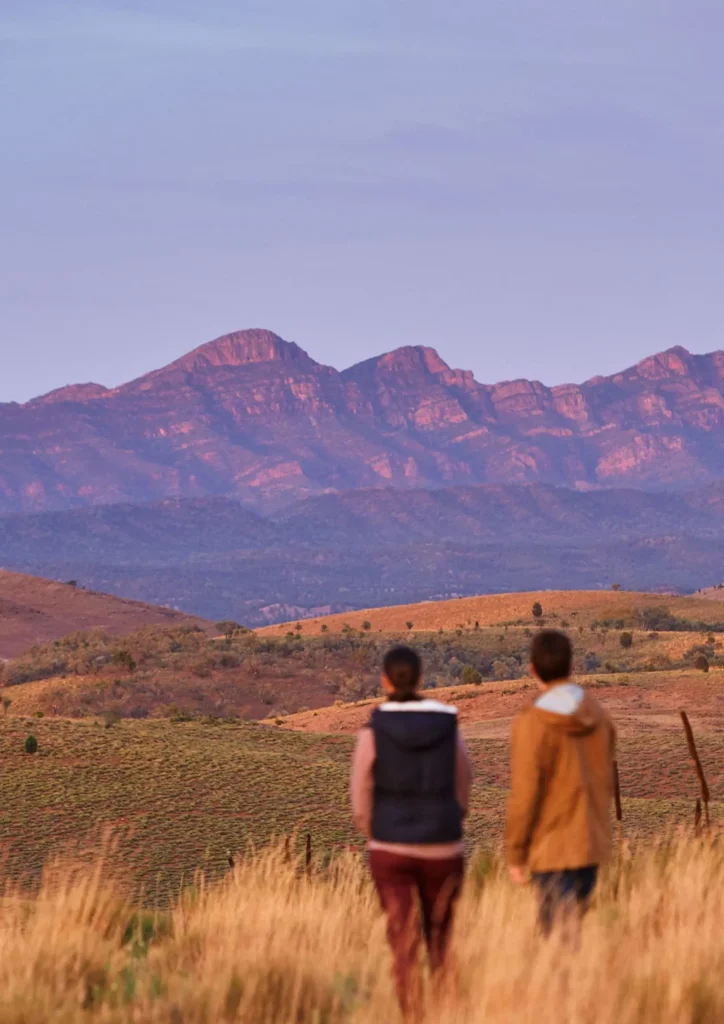
Photo Credit: South Australian Tourism Commission
It suits couples and small groups more than caravans, since some of the station’s own tracks are 4WD only.
✅ Mount Little Station, about 15 minutes from Hawker, mixes easy self-guided 4WD tracks through the Elder Range with campsites, hot showers and a small on-site tavern that runs pizza nights midweek and on Saturdays.
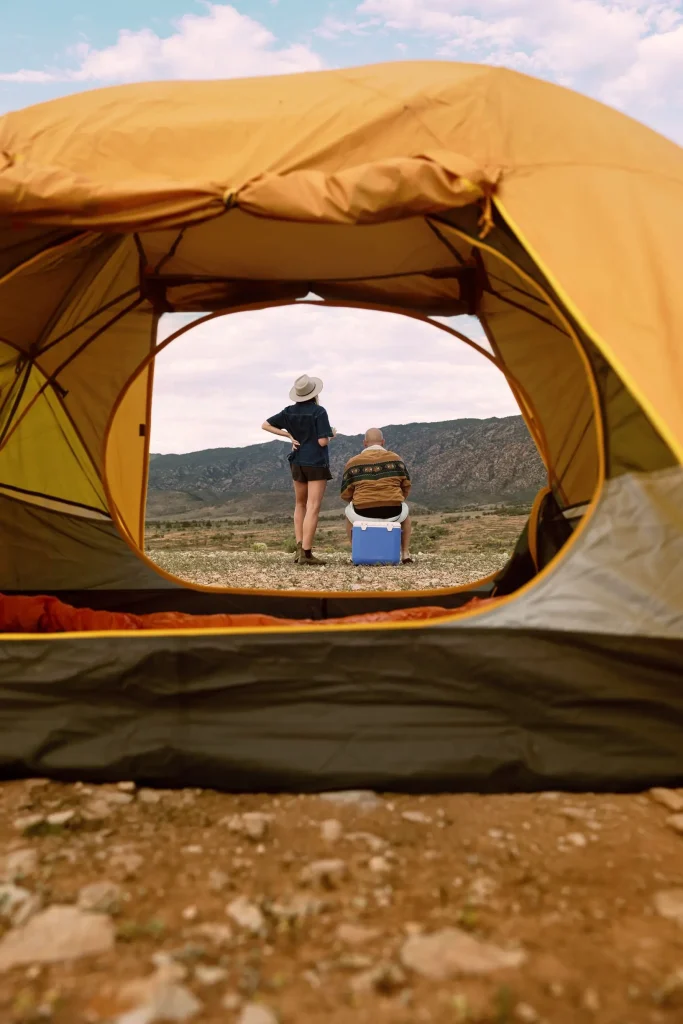
It’s a good pick for families or anyone wanting a taste of 4WD-ing without committing to a full station like Willow Springs. It only opens for the cooler tourist season, roughly March to October, which lines up with the best time to visit anyway.
✅ Merna Mora Station, tucked between Hawker and Wilpena Pound, has secluded bush camping in a creek setting plus powered sites and a communal camp kitchen.
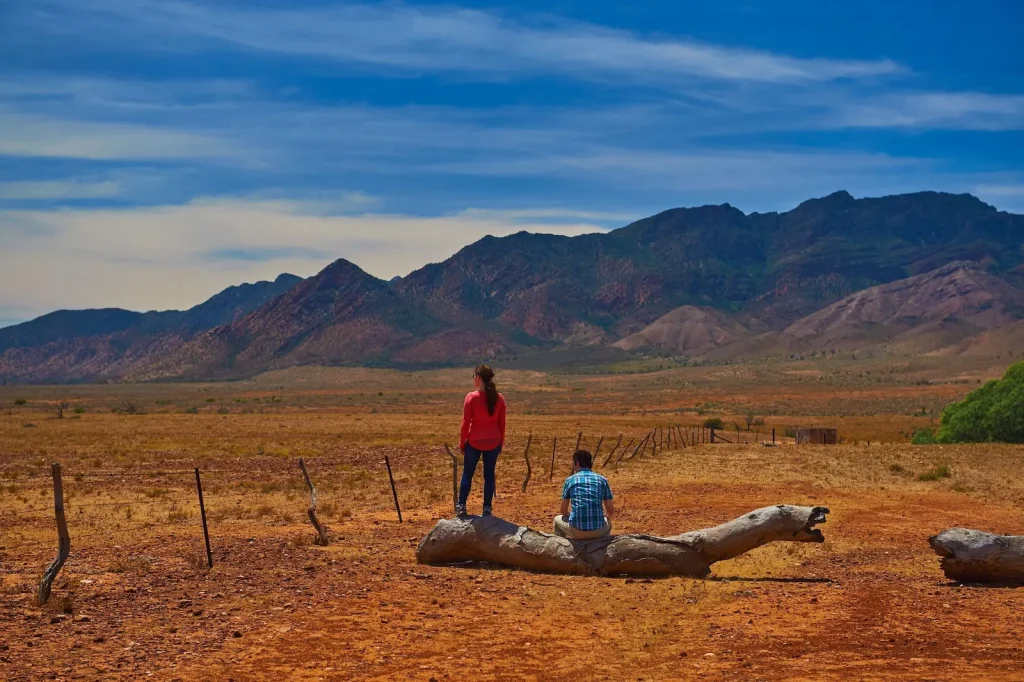
It’s quieter than the bigger stations and a good option if you want isolation without giving up a shower.
✅ Angorichina Tourist Village, on Parachilna Gorge Road west of Blinman, is worth knowing about even if you’re not staying there, because it’s one of the only places for a long way in any direction with fuel, groceries and camping supplies. It also has its own campsites and cabins.
✅ Blinman, the highest town in South Australia with a population of around 40, has caravan and camping sites through the North Blinman Hotel, plus a pub meal at the end of the day, which matters more than it sounds like after a day of dirt roads.
Do You Need a Permit to Camp in the Flinders Ranges?
Yes. Entering Ikara-Flinders Ranges National Park requires a day entry permit per vehicle, and camping inside the park needs a separate camping permit for whichever site you’re booking.
Both are bought online in advance through the national park’s booking system, not at a gate, so sort this before you leave rather than assuming you can pay on arrival.
If you’re planning to visit more than one South Australian national park on the same trip, it’s worth looking at a multi park pass, which covers unlimited entry to most SA parks for two months or twelve months.
It covers Ikara-Flinders Ranges but not the Desert Parks or Flinders Chase on Kangaroo Island, so check it matches your itinerary.
Free camps like Parachilna Gorge and Hookina Ruins sit outside the national park boundary and don’t need a permit at all.
Best Time to Go Camping in the Flinders Ranges
April to October is the window most locals recommend, and I’d stick to it. Summer in the outback here regularly hits the high 30s and low 40s, which is genuinely dangerous for camping, let alone hiking.
Autumn and spring bring warm days around 20 to 25 degrees Celsius and cold nights, so pack for both. Winter days are mild and clear, but early mornings can drop close to freezing, especially at higher campsites like Wilpena.
Fire bans typically run from 1 November to 30 April, though the Flinders district often wraps up its fire danger season by mid-April, and exact dates shift with conditions each year, so check the current fire danger season before you leave rather than assuming last year’s dates still apply.
On total fire ban days, even gas cooking stoves may be restricted in some areas, so it pays to check before you pack the barbecue plate.
School holidays and long weekends push up demand at the more popular national park sites and at Wilpena and Rawnsley Park, so book ahead if you’re travelling during those windows.
How to Get to the Flinders Ranges
The Flinders Ranges sit roughly 430 to 500 kilometres north of Adelaide, depending on which part of the range you’re heading to, which works out to around five hours of driving.
The main routes in are sealed the whole way to Hawker and Wilpena Pound, and most of the national park’s internal roads are graded gravel, generally fine in a well-driven 2WD in dry weather.
Brachina Gorge Road is the one that catches people out though – it looks like an easy gravel drive but has a rocky, technical stretch that’s sent more than one 2WD driver reversing back out rather than risk hanging up the car, so treat it as a maybe rather than a given unless you’re prepared to turn around.
After rain, some sections become 4WD-only or close completely, so I’d check current road conditions online before setting off, particularly if you’re heading further into the northern ranges.
Fuel is sparser than people expect. Outside Hawker, Wilpena and Angorichina Tourist Village, you can go well over 100 kilometres between bowsers, so top up whenever you pass a station rather than waiting until the tank is low.
What to Pack for Camping in the Flinders Ranges
Beyond the obvious tent and sleeping gear, a few things matter more here than at a coastal campground.
✔️ Extra water – most bush sites have limited or no reliable water, and even sites with a tank shouldn’t be your only source.
✔️ Paper maps or a downloaded offline map – phone signal drops out completely across large parts of the ranges. I was with Vodafone when we went to the Flinders Ranges and there was no reception anywhere except in the Wilpena Pound Resort.
✔️ Your own firewood – collecting timber inside the national park isn’t allowed, so bring what you need.
✔️ A proper first aid kit – the nearest hospital can be a genuine drive away.
✔️ Warm layers, even in the shoulder seasons – desert nights cool down fast once the sun goes.
Southern Flinders Ranges vs Northern Flinders Ranges Camping
The Flinders Ranges stretch a long way, and where you camp changes the trip.
The Southern Flinders, around Melrose and Mount Remarkable National Park, is the easiest introduction.
It’s roughly three hours from Adelaide, has good mountain biking and walking trails, and Alligator Gorge inside the park is one of the more accessible gorge walks in the whole region.
This makes it a solid option for a first outback camping trip or a family weekend away.
The Northern Flinders, past Blinman towards Arkaroola and Vulkathunha-Gammon Ranges National Park, is remoter, rougher, and better suited to experienced campers with a 4WD.
Arkaroola Wilderness Sanctuary is South Australia’s first International Dark Sky Sanctuary, and camping under those skies is genuinely one of the best stargazing experiences in the country.
Budget extra fuel, extra water and extra time if you’re heading this far north.
For a broader look at what else the region offers beyond camping, I’ve also put together a guide to things to do in the Flinders Ranges and a separate one on Flinders Ranges hikes, both worth reading before you finalise an itinerary.
If the outback has got its hooks in you, my must-do outback experiences guide covers more of South Australia and beyond.
Know Before You Go
A few things catch people out on their first Flinders Ranges camping trip.
‼️ You can’t camp just anywhere. Camping inside the national park is restricted to designated, bookable campgrounds, and setting up outside a marked site isn’t allowed.
‼️ Free camping is only legal at recognised sites like Parachilna Gorge and Hookina Ruins, not on random roadside pull-offs.
‼️ Dogs and other pets aren’t allowed inside Ikara-Flinders Ranges National Park, including on walking trails and at the campgrounds.
Hookina Ruins is one of the few nearby free camps that does allow pets, so plan around that if you’re travelling with an animal.
‼️ Sacred Canyon is guided-tour only now. The rock engravings there used to be a self-guided stop, but access is through a booked Adnyamathanha cultural tour these days, so build it into your itinerary ahead of time rather than turning up expecting to walk straight in.
‼️ Quiet hours matter more out here than at a normal caravan park. Sound carries a long way across open country at night, and most campers are up early to beat the heat, so keep noise down once it gets dark.
‼️ Book your base camp before you arrive, especially Wilpena Pound and Rawnsley Park Station over Easter, school holidays and long weekends, since both fill up well in advance.
‼️ Where to base yourself depends on what you’re doing. Wilpena Pound or Rawnsley Park Station suit anyone wanting to explore the central national park on day trips, Hawker suits people who want fuel and supplies close by, and Blinman or Angorichina suit anyone pushing further north.
‼️ Camping in the Flinders Ranges works for couples wanting a quiet weekend away, families who don’t mind a bit of dust, and solo travellers chasing dark skies and empty trails alike.
‼️ Budget campers can go free at Parachilna Gorge or Hookina Ruins, while anyone wanting a bit more comfort has plenty of powered and serviced options at Wilpena, Rawnsley Park and the stations further out.
