
Don’t Drive the Great Ocean Road Until You’ve Read This

Australia Travel Hub contains affiliate links and is a member of the Amazon Services LLC Associates Program. If you make a purchase using one of these Amazon links, we may receive compensation at no extra cost to you. See our Disclosure Policy for more information.
This Great Ocean Road guide covers everything from the first stop at Torquay to the final stretch past Warrnambool — 243 kilometres of coastline, rainforest, and sea-carved rock that make up one of the best road trips in Australia.
I’ve driven it myself — three days, straight from Melbourne Airport, using Apollo Bay as a base, doing the Otways waterfalls, walking Loch Ard Gorge, and taking a helicopter over the Twelve Apostles. This is everything I’d tell you before you go.
The problem is that most people rush it in a day, miss the stops that locals actually rate, and spend most of their time at the Twelve Apostles while better formations sit empty 20 minutes down the road.
How Long Do You Actually Need on the Great Ocean Road?
The honest answer is at least two nights — ideally three.
A day trip from Melbourne is physically possible but widely considered a mistake. You’re looking at a 12–13-hour day with very little time to stop, and you’ll spend the last two hours driving back to Melbourne in the dark, exhausted.
Two nights is the practical minimum: overnight in Apollo Bay, then Port Campbell or Warrnambool. This gives you the whole eastern section on day one, the Otways and Apostles area on day two, and a relaxed exit on day three.
Three nights is the sweet spot if you want Otways inland detours — the Redwoods, waterfalls, or glow worm walks — without feeling rushed.
| Trip length | What you can cover |
|---|---|
| Day trip | Possible but rushed — highlights only, no inland detours |
| 2 nights | Eastern section + Apostles area comfortably |
| 3 nights | Everything, including Otways inland and a relaxed pace |
| 4+ nights | Add Port Fairy, Warrnambool whales, and the western stops most people miss |
I did it in three days — flying into Melbourne at 9:30 am on day one, driving straight to the GOR, and using Apollo Bay as a base for two nights. It worked well, but I’d add a fourth night if I had the time again.
For a detailed day-by-day breakdown, the 3-day Great Ocean Road itinerary has every stop, timing, and overnight stay mapped out.
Which Direction Should You Drive?
Driving the Great Ocean Road east to west — starting in Torquay and finishing near Warrnambool — is the direction most people take, and it’s the better choice for first-timers.
You’re on the ocean side of the road the whole way, which makes stopping and pulling over for photos much easier. Eastbound traffic stays on the cliffside.
A minority of experienced travellers recommend starting from the Portland end and driving east — the views are different, and the crowds thin out completely. If you’ve done the road before and want a fresh perspective, it’s worth considering.
For road rules, overtaking tips, fuel stops, and what to watch for on the narrow coastal sections, see the full Great Ocean Road driving tips guide.
Getting to the Great Ocean Road from Melbourne
Torquay is about 100km south-west of Melbourne — roughly an hour’s drive from the CBD.
If you want an early start, consider staying overnight in Geelong the night before. It’s 15 minutes from Torquay and lets you hit the road early before the tour buses pile in.
Most people hire a car in Melbourne. There’s no practical public transport option for the full route. If you’re building a broader Victoria trip, the Melbourne itinerary pairs well with the GOR as a 4–5-day combined trip.
I flew into Melbourne Airport at around 9:30 am, picked up the hire car, and was on the GOR by midday — a same-day start is completely doable if you land in the morning.
Great Ocean Road Stops — Full Route Guide
Torquay
Torquay is the official start of the Great Ocean Road and Australia’s surf capital.
Bells Beach is about 6km from town — it hosts the Rip Curl Pro, the world’s longest-running professional surf contest. The waves are big, and the beach is beautiful even when the contest isn’t on.
The GOR Memorial Arch is about 2.5km from Torquay at the official start of the road. It was built post-WW1 and has information stones alongside it — worth stopping for the photo and the context.
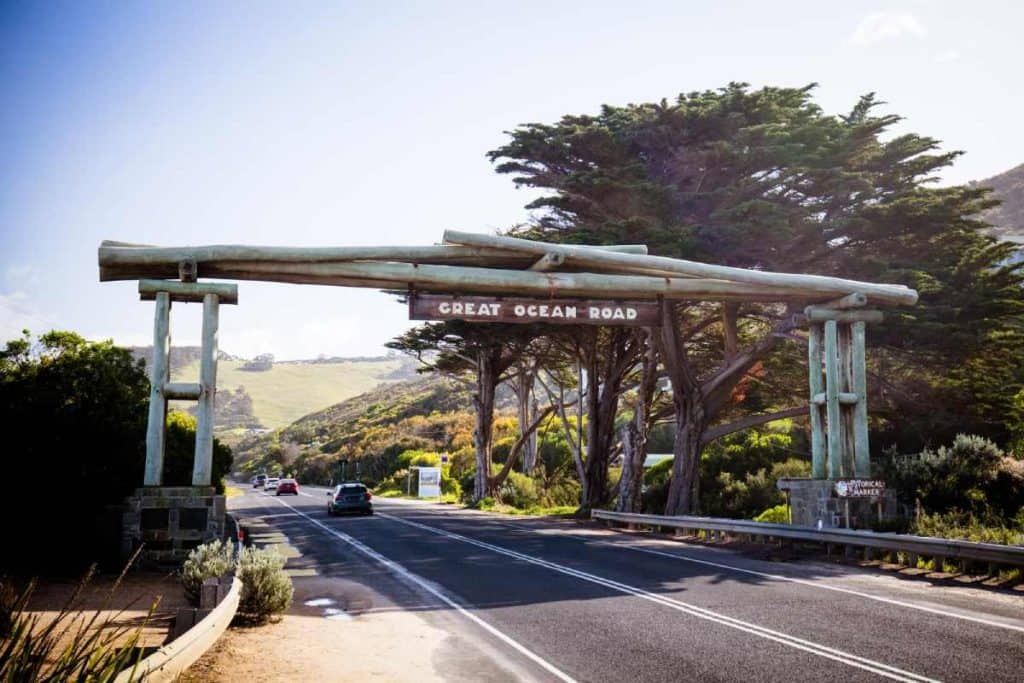
Before leaving the Torquay area, the Chocolaterie & Ice Creamery sits on the main road between Bellbrae and Anglesea and is a reliable stop with kids.
Anglesea
Anglesea is a quiet town about 20 minutes from Torquay.
The kangaroos at Anglesea Golf Club are worth a look — a mob lives on the fairways, and you can often walk right up to them. Free to visit outside of course hours.
Point Addis Beach Lookout sits a few minutes past Anglesea — 80-metre red slumping cliffs drop down to a wide sweep of quiet golden sand. Good for a walk away from the crowds or just the view from above. A 5-minute detour off the main road.
Aireys Inlet
Aireys Inlet sits about 12km past Anglesea and is best known for the Split Point Lighthouse — the lighthouse used in the filming of the TV show Round the Twist.
The Lighthouse Tea Rooms next door get consistently good reviews for toasties and coffee. A good early lunch stop before Lorne.
Lorne
Lorne is the best town on the eastern section of the road.
It has a proper main street with cafés, restaurants, and shops, a sheltered beach good for swimming, and access to waterfalls in the Otway Ranges behind it.
Erskine Falls is the most accessible waterfall detour — about 8km inland from town, with a 20-minute drive and an easy walk down to the base. It’s a tall cascading waterfall surrounded by tree ferns and mountain ash. Worth the detour.
Teddy’s Lookout is a quick stop on the edge of town with good coastal and river views — worth 15 minutes if you haven’t had a proper view yet.
If you want more waterfall time, the Sheoak Picnic Area is about 10 minutes out of Lorne and has six different trails — Henderson Falls, Sheoak Falls, Kalimna Falls, and others ranging from 3 km to 8.6 km return. Good option if you’re spending a night in Lorne and want a proper morning walk.
The Surf Coast Walk is also worth knowing about — a 44km marked trail connecting Torquay, Anglesea, and Aireys Inlet along the coast. It’s split into 12 sections, so you can walk just one or two stages without committing to the whole thing.
Lorne Hotel is the classic pub in town — good meals and cold beers right on the main strip.
Note: Lorne can get very busy on summer weekends. If you’re passing through in January or during school holidays, keep moving and come back on a quieter day.
Kennett River
Kennett River is about 27km past Lorne — roughly 35 minutes — and one of the most reliable spots on the east coast for wild koala sightings.
The Koala Walk runs up Grey River Road — a sealed road that climbs into the blue gum forest. Koalas are spotted regularly in the trees on both sides, usually within the first kilometre or two. Early morning and late afternoon are the best times.
A local tip: if Kennett River is crowded (which it often is), the manna gum forest along Cape Otway Lighthouse Road — further west — can produce better sightings with far fewer people.
One local reported seeing just 2 koalas at Kennett, but 20 in close proximity near Cape Otway. Keep both on your radar.
The Grey River Reserve is also here and worth noting if you’re interested in glow worms — they’re active in the bush after dark.
For the full rundown on koalas, echidnas, wombats, and where to spot each one along the route, the Great Ocean Road wildlife guide has everything you need.
Apollo Bay
Apollo Bay is the best overnight stop on the eastern section and a natural base for Otways day trips — and honestly, it’s the part of the GOR I’d come back to in a heartbeat.
There’s something about the feel of this town that’s hard to explain. It’s laid-back and unhurried in a way the bigger spots aren’t.
Wide sandy bay, a working harbour, a main street of good cafés and seafood restaurants — it just doesn’t feel like a tourist trap. Fresh seafood from the pier is a classic stop — Bay Leaf Cafe is a reliable breakfast and coffee option.
I stayed at Apollo Bay Beach Stay for two nights and used it as a base for everything — the beach is 350 metres down the street, and the deck looks out to the Cape Otway Ranges foothills. Good option if you prefer an Airbnb over a hotel.
Marriners Lookout sits above the town and gives panoramic views of the bay and the Otways ranges — worth the short drive up for orientation.
If you want to swim, Apollo Bay’s main beach is one of the safer options on this section of coast and is patrolled in season — it’s one of the better beaches in Victoria for a family-friendly dip.
For something different, Apollo Bay Surf & Kayak runs guided seal kayak tours from nearby Marengo — you paddle out to the fur seal colony at Marengo Reefs Marine Sanctuary and watch them swim, bark, and occasionally come right up to the kayaks. Around $99/person, 1.5 hours. Book ahead.
Otways Inland Detours
The section between Apollo Bay and Port Campbell is where the route turns inland briefly into the Great Otway National Park — and it’s home to some of the best things to do on the Great Ocean Road that most people skip entirely.
Don’t.
California Redwoods (Beech’s Forest)
About 30km inland from Apollo Bay near the town of Beech’s Forest, the California Redwoods are a grove of towering Californian sequoias planted in the 1930s.
They’re already extraordinary and are expected to eventually surpass the height of the originals in America. A short walk through them takes around 20–30 minutes. Free entry.
Beauchamp Falls
Beauchamp Falls is the least visited of the main Otway waterfalls and arguably the most rewarding.
A 20-minute downhill walk from the car park drops through mountain ash forest thick with myrtle beeches and ferns into a rocky amphitheatre where the falls cascade into a deep pool. Bring shoes with grip.
About 75 minutes total, including the drive in and back out.
Stevensons Falls (Barramunga)
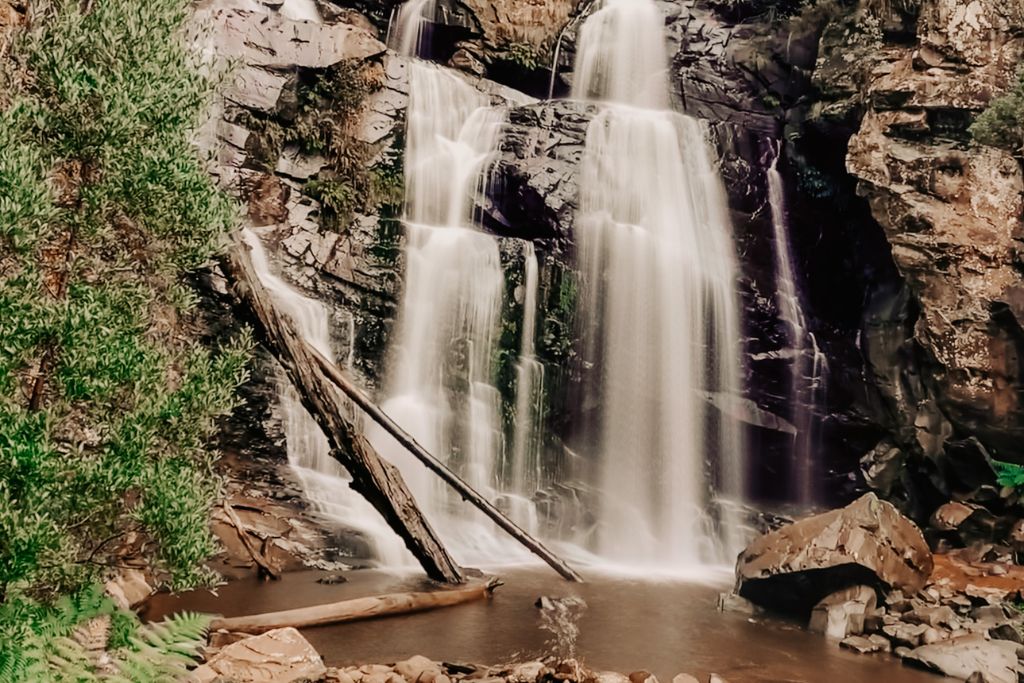
Stevensons Falls is near the small town of Barramunga, about 35km inland from Apollo Bay. It’s an easy, flat walk through the ferns — nothing demanding — and the falls themselves are wide and beautiful.
I drove out here specifically, and it was worth every minute. Not as well-known as Hopetoun or Beauchamp, which means you’ll likely have it to yourself. Budget around 45 minutes return from the car park.
Hopetoun Falls and Triplet Falls
Both are in the Great Otway National Park near the Redwoods.
Hopetoun Falls plunges 30 metres and is the more photogenic of the two — the lower viewing platform (200 steps down) is the one worth the effort. Triplet Falls is a longer walk (about 4km return) through tall eucalypt forest. Budget an hour each.
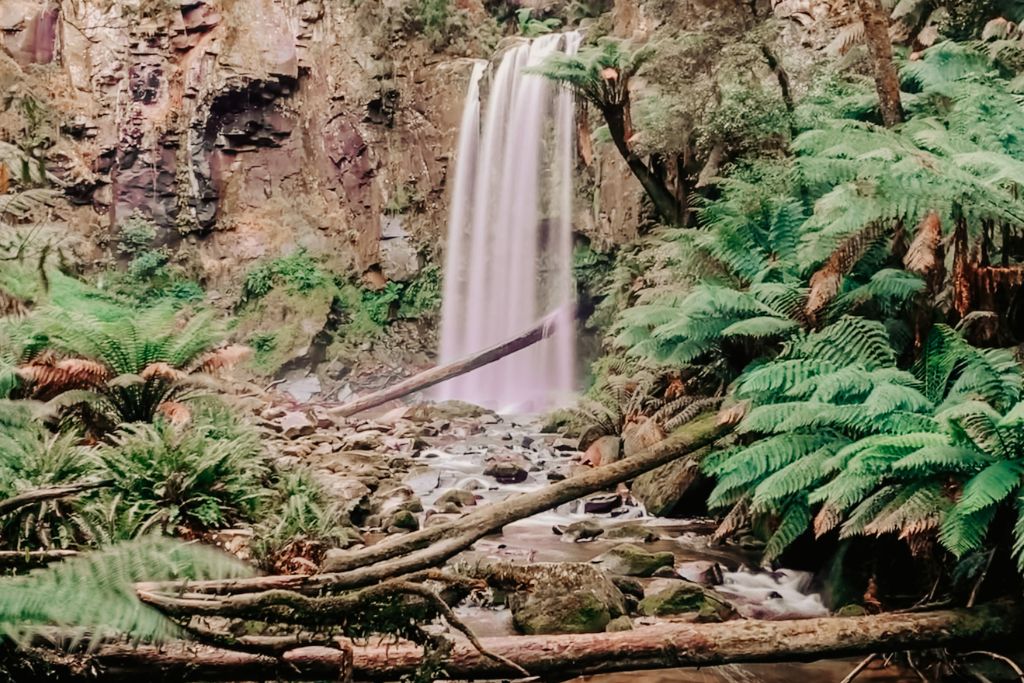
The steps down to the lower platform at Hopetoun are genuinely tiring, especially if you’ve already done a few walks that day. Push through — the view at the bottom is worth every one of them.
Maits Rest
Maits Rest is right on the GOR itself, a few kilometres west of Apollo Bay. It’s a free 30-minute loop through a cool temperate rainforest with massive mountain ash trees and myrtle beeches.
Almost nobody stops here, and it’s one of the most overlooked spots on the whole route.
Melba Gully
Melba Gully is a rainforest gully walk in the park’s interior. It’s one of the best spots on the GOR to see glow worms after dark — bring a torch and go slowly along the creek. Free entry.
Otway Fly Treetops Adventure
Otway Fly Treetop Adventures is about 70km from Apollo Bay — roughly 50 minutes via Lavers Hill.
The treetop walk is an elevated metal walkway 30 metres above the forest floor, 600 metres long, with a cantilevered lookout and spiral staircase.
Allow 60–90 minutes. A zipline tour is also available — 2.5 hours through the canopy with a guide; bookings essential.
Lake Elizabeth
Lake Elizabeth is a flooded forest lake about 20km inland from Apollo Bay. Platypus sightings at dusk are common on guided canoe tours. Book ahead — Otway Eco Tours runs the trips from around $85/person.
Cape Otway Lightstation
Cape Otway Lightstation is about 21km down a sealed road off the GOR, past Manna Gum Forest, where koalas are commonly spotted from the road.
The lightstation itself is Australia’s oldest surviving mainland lighthouse, built in 1848. Entry to the heritage precinct is open daily 9 am–5 pm (last entry 4:30 pm).
Important for 2026: The lighthouse tower is currently closed for heritage restoration works — you can’t climb it or go inside. Entry to the wider precinct is available at a discounted rate. Check lightstation.com before you go for current pricing and what’s accessible.
Petrol note: fill up in Apollo Bay. There are almost no petrol stations between Apollo Bay and Port Campbell — roughly 95km of remote coastline.
EV drivers should also check charging availability before leaving Apollo Bay — there are no fast chargers in this section.
Johanna Beach and Blanket Bay
If you have extra time between Apollo Bay and Port Campbell, Johanna Beach and Blanket Bay are two of the better hidden gems on the GOR that most guides overlook.
Johanna Beach is a wild surf beach about 45km west of Apollo Bay — dramatic, exposed, and rarely crowded. It’s not for swimming (powerful shore break), but the scenery is worth the short detour off the main road.
Blanket Bay is a sheltered camping and swimming spot in the Otway National Park — calm enough for kids and well-regarded by locals.
The Shipwreck Coast — Port Campbell Area
This is the main event for most people on the Great Ocean Road, and it deserves at least a full day.
Twelve Apostles
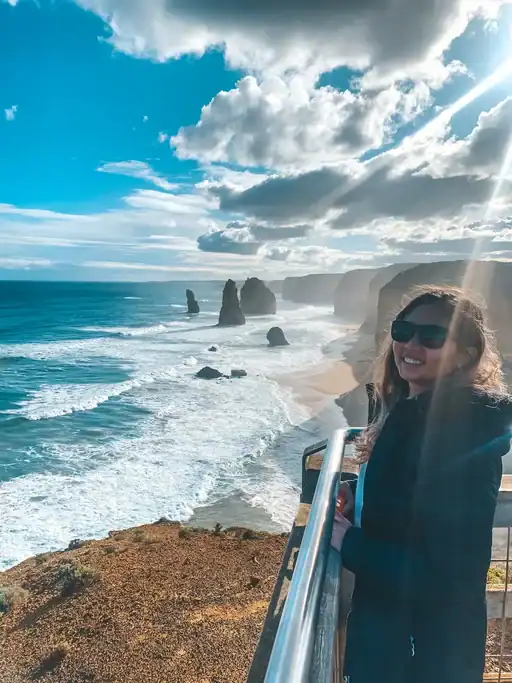
The Twelve Apostles are the most photographed stop on the GOR — a series of limestone sea stacks rising out of the Southern Ocean.
There are currently eight stacks standing (the ninth collapsed in 2005, and others have eroded over time).
Sunrise and sunset are the best times to visit — the light on the rock faces is completely different from midday, and the tour bus crowds haven’t arrived at dawn.
Walking the lookout at a busy time of day is overwhelming — the path is packed, and it’s hard to stop and actually take it in. If you can only go once, go early.
For the best camera angles across the whole route — from the Memorial Arch to the Razorback — see the Great Ocean Road photo stops guide.
The best way to see the Apostles — and the surrounding formations — is from a helicopter. 12 Apostles Helicopters operates from the car park area, and the perspective from above is completely different from what you see on the ground.
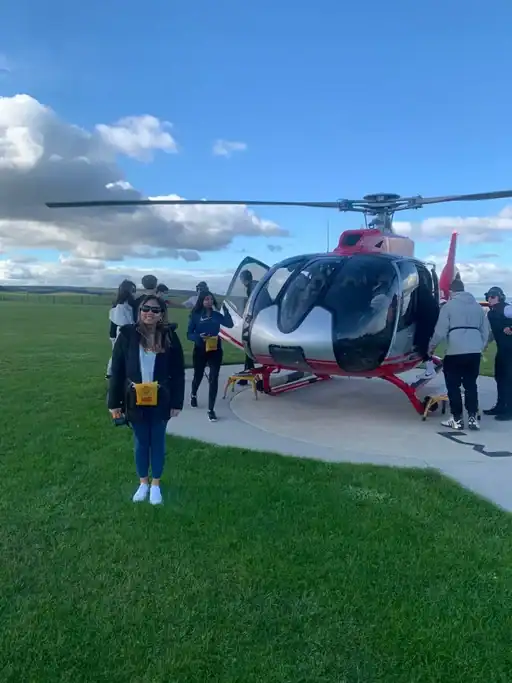
You get the full scale of the coastline, the stacks from every angle, and none of the crowds. I’d rate this as one of the best experiences on the whole GOR.
Important for 2026: A new $126 million Twelve Apostles Visitor Experience Centre is nearing completion. A timed booking system and entry fee (expected under $20/person) are planned for introduction in late 2026.
Check greatoceanroadauthority.vic.gov.au before your visit for current details — this may affect how you plan your timing.
Gibson Steps
Gibson Steps are a set of 86 steps cut into the cliff face, leading down to a beach-level view of the Apostles.
Current status: closed due to rock falls. Check Parks Victoria for updates before visiting.
Loch Ard Gorge
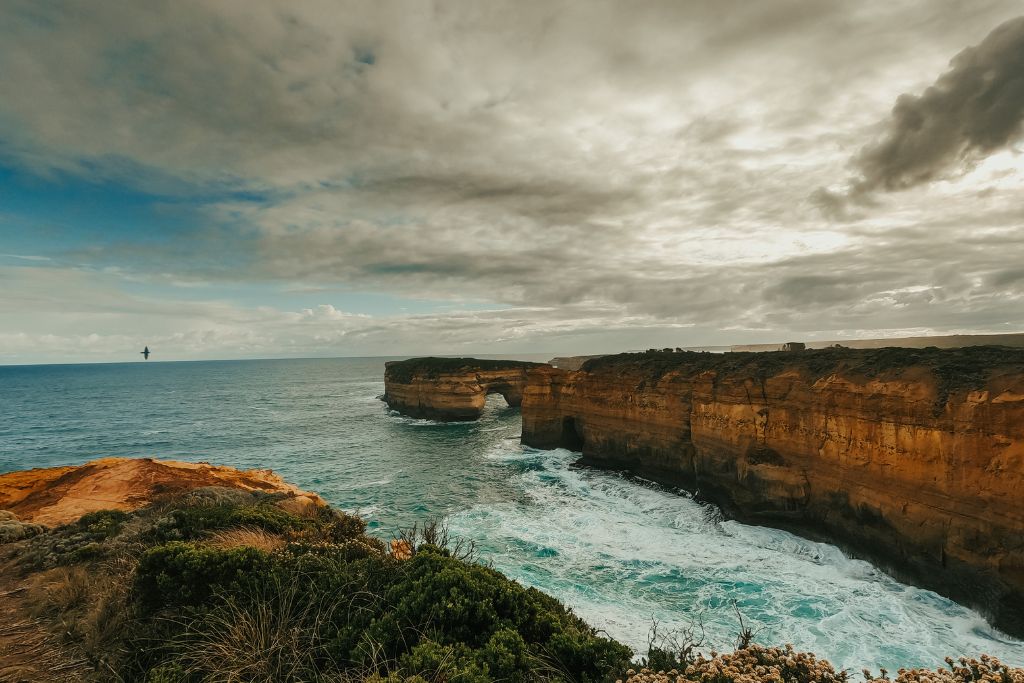
Loch Ard Gorge is named after an 1878 shipwreck — the iron clipper Loch Ard foundered on the rocks nearby, and only two teenagers survived by swimming into the gorge. Eva Carmichael and Tom Pearce were both 18.
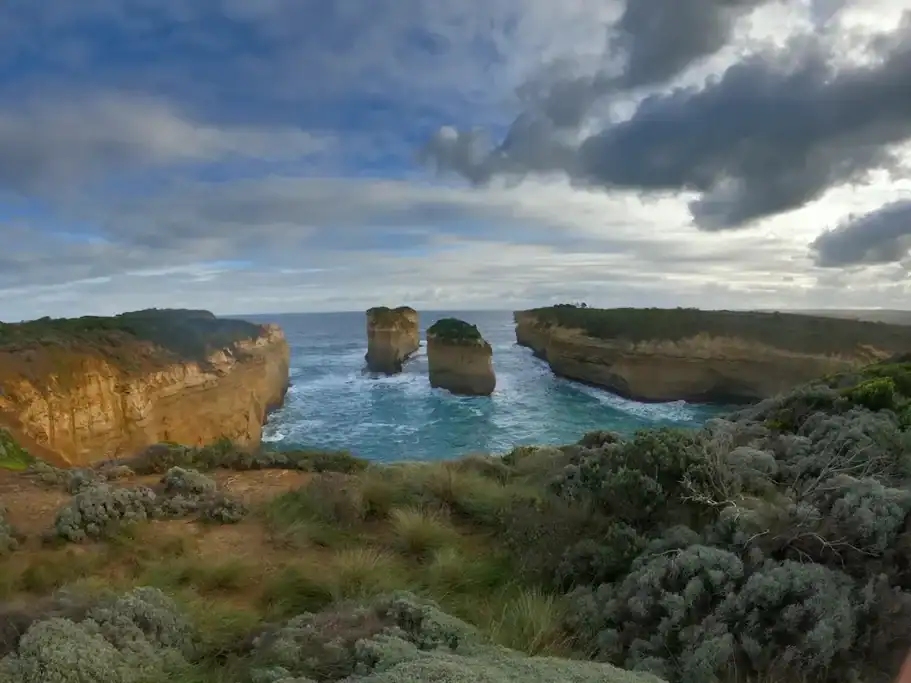
The gorge itself is dramatic — a narrow inlet with turquoise water surrounded by sheer limestone cliffs.
There are 7km of linked trails from the car park covering multiple formations, including the Razorback, Island Arch, and the cemetery.
I walked the Razorback and the gorge lookouts on the same visit — allow at least 90 minutes to do it properly rather than rushing back to the car park.
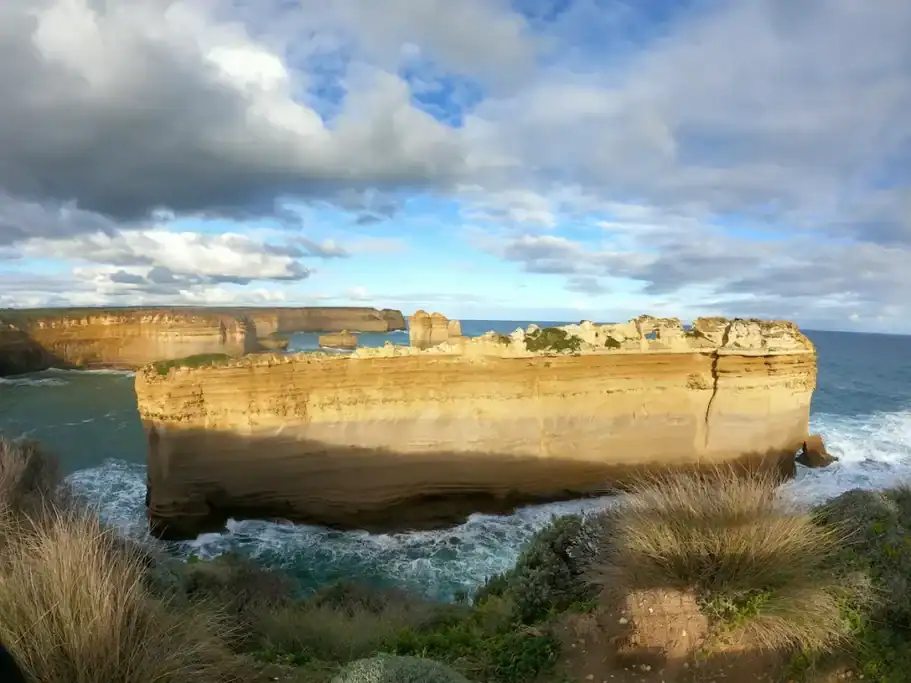
Current status: The main stairs down to the gorge floor are closed due to rock falls. You can still access the lookouts and surrounding walks. Check Parks Victoria for updates.
The Grotto
The Grotto is a sinkhole about 4km west of Loch Ard Gorge. Steps lead down into it where you look through a natural arch straight out to the ocean — simple, free, and it takes about 15 minutes.
London Arch
London Arch (formerly London Bridge) is a natural rock arch about 1km west of the Grotto. The landward section collapsed in 1990, leaving two tourists stranded on the outer platform — they had to be rescued by helicopter.
The Arch lookout is currently closed — no access. Check for updates.
Bay of Martyrs and Bay of Islands — The Stops Most People Miss
About 20km west of Port Campbell, near the small town of Peterborough, the Bay of Martyrs and the Bay of Islands are two of the best viewpoints on the entire road.
Multiple long-time locals rate them above the Twelve Apostles — dozens of eroded limestone stacks and arches spread across a wide open bay, with walking trails to several different lookouts that each reveal a completely different view. And almost nobody stops here.
Peterborough General Store in town is worth a stop for coffee or a snack between these two lookouts.
Childers Cove, a little further along towards Warrnambool, is another spot that barely makes it into guides — a sheltered rocky cove with sea cave access at low tide.
There are more spots like these scattered across the route. The full list is in the Hidden Gems along the Great Ocean Road guide.
Port Campbell
Port Campbell is a small town right on the coast and the best base for the Shipwreck Coast.
The town beach is the only genuinely sheltered swimming beach between Apollo Bay and Warrnambool — Port Campbell sits in a natural inlet that cuts the swell. Useful if you have kids or just want a swim that won’t kill you.
The 4km Port Campbell Discovery Walk starts from town and gives elevated views back over Loch Ard, Sentinel Rock, and the Apostles — a good evening walk to catch the light changing on the cliffs.
12 Apostles Artisan Food Trail
The area around Port Campbell has a legitimate food trail worth building time into.
- Apostle Whey Cheese — small-batch farmhouse cheeses near Peterborough
- Timboon Fine Ice Cream & Distillery — a working whisky distillery with a cafe and ice cream made from local dairy, about 20km inland from Port Campbell
- Allansford Cheese World — a large cheese and produce store just outside Warrnambool
- Gorge Chocolates — Port Campbell town
Maps for the full trail are available at tourist information centres in Port Campbell.
Warrnambool
Warrnambool is Victoria’s largest coastal city outside Melbourne and the natural endpoint for most GOR trips.
The main attraction from May to September is whale watching. Southern right whales use Logan’s Beach as a nursery — mothers and calves come into shallow water close to shore and can be watched for free from the purpose-built viewing platform. It’s some of the best land-based whale watching in Australia.
Flagstaff Hill Maritime Village is a recreated 19th-century maritime village built around the Shipwreck Coast story — over 600 ships wrecked in this stretch of ocean.
The collection includes the Loch Ard Peacock, a Minton porcelain piece salvaged from the 1878 wreck and valued at over $4 million. Entry is around $19.50/adult. Worth a few hours if the history interests you.
Deep Blue Hotel & Hot Springs runs geothermal mineral pools, waterfalls, and aromatherapy caves right near Logan’s Beach. A good way to end a long driving day.
Tower Hill Wildlife Reserve is about 15km west of Warrnambool — a volcanic crater reserve where emus, koalas, kangaroos, and wallabies roam freely. The 30-minute Lava Tongue Boardwalk is the best trail for koala spotting. Free entry.
Port Fairy is 28km further west and worth the short detour — a genuinely beautiful historic fishing village with a strong restaurant scene and some of the best cafés on the south-west coast.
Blakes seats about 10 people and is consistently rated one of the best seafood restaurants in the region — book well ahead.
Best Time to Visit the Great Ocean Road
| Season | What to expect |
|---|---|
| Autumn (March–May) | Best overall — mild temps, smaller crowds, whale season starts in May |
| Winter (June–August) | Cool and wet, peak whale watching, green waterfalls, quiet roads |
| Spring (September–November) | Wildflowers, good walking conditions, crowds picking up from October |
| Summer (December–February) | Peak season, hot, very busy especially January school holidays — book months ahead |
January is the hardest time to visit logistics-wise — accommodation books out months ahead, Kennett River and the Apostles are packed with tour buses, and campfires in the national parks are restricted by fire bans.
Autumn is the best all-round season. March and April have warm enough weather to swim, walking conditions are good, and you’ll share the road with a fraction of the summer crowd.
Where to Stay on the Great Ocean Road
For a deep dive into the best accommodation options across every budget and every town on the route, the Great Ocean Road accommodation guide covers it all. Below are my top picks by category.
Best Airbnb Option
Apollo Bay Beach Stay — if you’d rather an Airbnb than a hotel, this is a solid choice in Apollo Bay. The beach is about 350 metres from the door at the end of the street, and the deck has views across to the foothills of the Cape Otway Ranges.
I stayed here and used Apollo Bay as my base for two nights — it’s a comfortable, well-located spot that makes the whole trip easier.
Budget
YHA Apollo Bay Eco — Sustainable hostel right in Apollo Bay, dorms from around $30–40/night. Good base for Otways day trips. Great communal spaces and eco design.
Cumberland River Holiday Park — Camping and powered sites in a river valley between Lorne and Apollo Bay, from around $40/night. Koalas are often visible in the surrounding bush.
Mid-Range
Cumberland Lorne Resort — Spacious apartments in Lorne with tennis courts, spa, and mountain views. From around $180–220/night.
Port Campbell Parkview Motel and Apartments — Quiet location 5 minutes’ walk from the beach in Port Campbell. Modern studios and apartments from around $120–150/night.
Luxury
Ocean House Lorne — Contemporary apartments on North Lorne Beach with rooftop bath and Loutit Bay views. From around $350/night.
Chocolate Gannets Beachfront Luxury Villas — Direct ocean views, double spa baths, and full privacy, a short drive from Apollo Bay. From around $400+/night.
Cape Otway Lightstation Heritage Accommodation — Staying on-site in the original lightkeeper’s cottages (built 1959) is one of the more unusual overnight options on the GOR. Sandstone walls, limited mobile reception, and complete quiet.
Options range from a cottage for small groups to a studio for couples. From around $285–350/night. Note: the lighthouse tower is currently closed for heritage restoration — check lightstation.com before booking if the tower climb is part of the draw.
Book well ahead for summer and school holidays — the GOR has limited rooms and popular properties sell out months in advance.
Mistakes That Will Ruin Your Great Ocean Road Trip
Doing it in a day. It’s a 12–13-hour trip back to back, and you’ll barely stop. Two nights minimum.
Skipping everything between Apollo Bay and the Twelve Apostles. The Redwoods, Maits Rest, Hopetoun Falls, and Melba Gully sit in this section, and most people drive straight past them.
Missing Bay of Martyrs and Bay of Islands. These formations near Peterborough are arguably better than the Twelve Apostles and have no crowds. Keep driving west past the Apostles.
Not checking the current closures. Gibson Steps, the Loch Ard Gorge stairs, and The Arch lookout are all currently closed due to rock falls. Don’t build your itinerary around them.
Running out of petrol between Apollo Bay and Port Campbell. It’s 95km of remote coastline with almost nothing open. Fill up in Apollo Bay.
Arriving at the Twelve Apostles at midday in summer. The light is flat, the car park is full of tour buses, and there’s no shade. Go at sunrise or in the late afternoon.
Driving at dusk or dawn without slowing down. Wombats and kangaroos are on the road at these times, and collisions happen regularly. Slow down on the unlit sections.
Not booking accommodation for January. Seriously — months ahead, not weeks.
For a full packing list covering layers, footwear for the walks, rain gear, and what to leave at home, the Great Ocean Road packing guide has it covered.
Is the Great Ocean Road Worth It?
Yes — but only if you give it enough time.
A rushed day trip will leave you frustrated and exhausted. Two nights change the experience completely.
You can stop when something catches your eye, do the walks that actually reward you, and reach the Apostles at a time of day when the light makes the photography worth it.
The road itself is the experience — not just the Apostles at the end of it.
See the Melbourne itinerary for how to combine this trip with the city, or go deeper with the 3-day Great Ocean Road itinerary if you want every stop and timing mapped out.
Frequently Asked Questions
How long does the Great Ocean Road take to drive?
The road runs 243km from Torquay to Allansford near Warrnambool. Without stops, that’s around 4 hours of pure driving. With stops, most people spread it across 2–3 days. A day trip from Melbourne (including the drive each way) is around 12–13 hours total.
What is the best direction to drive the Great Ocean Road?
Most people drive east to west — starting in Torquay and finishing near Warrnambool. This puts you on the ocean side of the road, making it easier to pull over for photos and views. Driving westbound also means you reach the Twelve Apostles at the end of the trip rather than the start.
How many Twelve Apostles are there?
Eight are currently standing. The original name “Twelve Apostles” was a marketing term — there were never actually twelve. One stack collapsed in 2005, and natural erosion continues.
Are the Twelve Apostles free to visit?
Currently, yes, but a timed entry system and fee (expected under $20/person) are planned for late 2026. A new $126M visitor centre is also being built. Check greatoceanroadauthority.vic.gov.au before you go.
What is the best stop on the Great Ocean Road that most people miss?
Bay of Martyrs and Bay of Islands near Peterborough — limestone formations that many locals rate above the Twelve Apostles, with almost no crowds. Most people turn back at the Apostles and never reach them.
Is the Great Ocean Road good in winter?
Yes. The road is quieter, the waterfalls are fuller, the coast is dramatic, and whale watching at Warrnambool (May–September) is at its peak. Roads can be wet, and some beach tracks are soft — check conditions before heading onto unsealed roads.
Where should I stay on the Great Ocean Road?
Apollo Bay is the best base for the eastern section and access to the Otways. Port Campbell is the best base for the Shipwreck Coast and the Apostles. For a 2-night trip, split between the two.
Do I need a 4WD on the Great Ocean Road?
No. The main GOR is sealed the whole way. A standard 2WD handles the full route fine. A 4WD is useful if you want to access remote beach tracks, Blanket Bay, or some back roads in the Otway.
